

Protect Yourself
Know Your Ground
How to Buy Colorado Land: 8 Checks to Run Before You Pay
Before you buy land in Colorado, run eight checks with free county and state records: owner and taxes, zoning, legal access, winter roads, water, power, wildfire and flood, and septic. Here's how, with a real Crestone lot as the example.

The short answer: Before you buy land in Colorado, run eight checks with free county and state records: owner and taxes, zoning and camping rules, legal access, winter roads, water, power, wildfire and flood, and septic. All eight take about 90 minutes with the parcel number. Walk away if the owner doesn't match the seller or no legal road reaches the land.
We buy and sell rural land for a living, and we run these same eight checks on every parcel before we buy it. Below is how to run each one yourself, what counts as a reason to walk away, and what we found when we ran all eight on a real 0.44-acre lot in Crestone, Saguache County.
In this article: What you need · 1. Owner and taxes · 2. Zoning and camping · 3. Legal access · 4. Winter roads · 5. Water · 6. Power · 7. Wildfire and flood · 8. Septic and soil · A real Colorado lot · Deals that failed · FAQ
What do you need before you check Colorado land?
You need two things: the county and the parcel number. The seller or the listing should give you both. If a seller won't share the parcel number, treat that as your first warning sign.
Most checks happen on free county and state websites. A few need a short phone call to county planning or the road office, so keep a phone handy. Colorado has 64 counties, and each one runs its own assessor, treasurer, map and planning office. If you're shopping near Pueblo, our 5 steps to buying vacant land in Pueblo covers that county.
1. Does the seller own it, and are the taxes paid?
Anyone can list land online, even people who don't own it. The county assessor shows the legal owner of every parcel, and the treasurer shows whether the taxes are paid. Back taxes follow the land to the next owner, and that would be you.
- Look up the owner. Search the parcel number on the county assessor's site. The owner should match the seller. Our guide to checking who owns a property walks through it.
- Check the tax bill. Search the same parcel on the county treasurer's site. You want a $0 balance. Here's how to check back taxes and liens.
- Use a title company. A title company you choose confirms the seller's identity and checks for liens before any money moves.
"We check taxes on every single property before we buy it. It's the first thing we look at after confirming ownership. You would be surprised how many properties out there have years of unpaid taxes sitting on them."
Andrew Gaasenbeek, co-owner of Compass Land USA
Walk away if the names don't match, or the seller stalls or rushes you.
What we found in Crestone: Clear. The owner on record matched the seller, and the county treasurer confirmed the taxes were paid.
2. Can you camp, park an RV or build on Colorado land?
It depends on the county. Many Colorado counties don't allow camping on vacant land, or only allow it for a few weeks a year. Some only allow an RV with a permit, or once utilities are in.
Mountain subdivisions often have a property owners association (POA) with its own rules, and yearly dues on top of property taxes.
- Find the zoning. The assessor record or the county map shows it. Our guide to checking property zoning explains how to read it.
- Ask about camping. Call county planning and ask how long you can camp or park an RV, and what permit it takes.
- Ask about a POA. Get the POA's rules and yearly dues. If there's no POA, get that in writing.
Walk away if the zoning or POA rules don't allow what you want to do.
What we found in Crestone: Clear for building. Homes of 900 square feet and up are allowed, and POA dues are $690 a year. Camping isn't allowed, and an RV needs a sewer hookup and a permit.
3. Can you legally drive to the land?
A dirt track you can see on satellite isn't legal access. Some parcels are only reachable across a neighbor's ranch, and the neighbor can lock the gate. You want a county road, a road on the plat map (the recorded subdivision map), or a recorded easement.
- Turn on the roads layer. Search the parcel on the county GIS map and turn on roads.
- Follow it on satellite. Trace the road from the parcel all the way to a public road on Google Maps. Here's how to check access and get coordinates for free.
- Ask for the easement. If the only way in crosses private land, ask the seller for a recorded easement.
"Access changes everything. A parcel with a county-maintained dirt road is a completely different investment than one you can only reach on horseback. Both can be good deals, but you have to know which one you are looking at."
Andrew Gaasenbeek, co-owner of Compass Land USA
Walk away if the records show no road or easement. That means it's landlocked.
What we found in Crestone: Clear. The lot fronts Lone Pine Way, a gravel road on the subdivision plat.
4. Can you reach the land in winter?
Legal access is one question. Getting there in January is another. Many counties only plow main roads, and subdivision roads may get plowed by the POA or not at all. Above 8,000 feet, snow can sit on a shaded road into spring, and melt turns dirt roads to mud.
- Call Road and Bridge. Ask the county road office who maintains the road to the parcel and whether it's plowed.
- Check the highway. COtrip, the state road site, shows closures and chain laws.
- Ask the POA. If the county doesn't plow it, ask who does, and what it costs.
Walk away if you need year-round access and the road is closed all winter.
What we found in Crestone: Ask. We haven't confirmed who plows Lone Pine Way yet. The lot sits at 8,064 feet, so this is a phone call to make before you buy.
5. Where will your water come from?
Colorado water law runs on "first in time, first in right." A pond or creek on your land doesn't mean you can use it, because owners who filed long ago come first. Most rural buyers drill a well, and under 35 acres a new well is usually for use inside the home only, according to Colorado State University Extension.
| What a new well can serve | 35 acres or more | Under 35 acres |
|---|---|---|
| Water in the home | Yes | Yes |
| Lawn and garden | Up to 1 acre | No |
| Livestock | Yes | No |
Source: Colorado State University Extension. For most wells drilled after May 8, 1972. Rules vary by area, so confirm for your parcel.
- Look up nearby wells. Search the area on the Colorado Division of Water Resources well permit map and note how deep nearby wells go. Our guide to checking well depth shows how.
- Read the well rules. Check what a well on a parcel your size is allowed to serve.
- Price the water. Ask a driller what a well costs, or the water district what a hookup costs.
Walk away if the state won't permit the well you need.
What we found in Crestone: Clear. No well needed. The Baca Grande water district main is across the street, and the water tap, the one-time hookup fee, is $5,000.
6. How far is the nearest power line?
Much of rural Colorado land has no power on it. What matters is the distance to the nearest line, because the utility or co-op charges to run it to you. If it's far, many buyers go solar. Either way, get a cost estimate before you buy.
- Find the nearest pole. Use satellite and street view to find the closest pole or green transformer box.
- Find the provider. Ask the seller or county planning which utility or co-op serves the parcel.
- Ask for a line estimate. Give them the address or parcel number and ask what a line would cost.
Walk away if you need grid power and no provider will serve the parcel.
What we found in Crestone: Clear. Power is underground, with a transformer next to the lot.
7. Can you insure a home there? Wildfire and flood risk
It depends on the lot's wildfire rating and flood zone, and you can look up both for free. The Colorado State Forest Service says about half of Coloradans live where homes meet wildfire-prone land. The risk affects your insurance and how much you need to clear around a home. Flood zones are rare on high, dry parcels, but canyons can flash flood.
- Check wildfire risk. Search the address on the state Colorado Forest Atlas wildfire viewer and note the rating.
- Check the flood map. Search the address on the FEMA Flood Map Service Center and note the zone.
- Get an insurance quote. Insurers look at the fire rating and the cleared space around a home.
Walk away if no insurer will cover a home there.
What we found in Crestone: Ask. There's no flood zone. The lot sits in piñon woods, and its wildfire rating is the one lookup we haven't done yet.
8. Can the ground take a septic system?
Only if the soil passes the county's test and the lot is big enough, or sewer reaches the lot. Colorado sets septic rules under state Regulation 43, and each county health department issues the permit. Some counties set a minimum lot size. Saguache County told us septic needs 1 acre, so small lots there need sewer. The soil test uses test pits, and the old perc test is optional now.
- Open Web Soil Survey. On the USDA Web Soil Survey, draw an area around the parcel, then open the Soil Data Explorer tab.
- Ask about septic rules. Ask county planning to transfer you to county health about lot size and the soil test.
- Check the slope and rock. Steep or rocky ground raises building costs. Here's how to check slope and elevation.
Walk away if the county says no septic will work and there's no sewer.
What we found in Crestone: Clear. Sewer runs in front of the lot, so no septic is needed. The sewer tap is $5,000. The lot has shallow rock, which affects the foundation, not septic.
What did all eight checks show on a real Colorado lot?
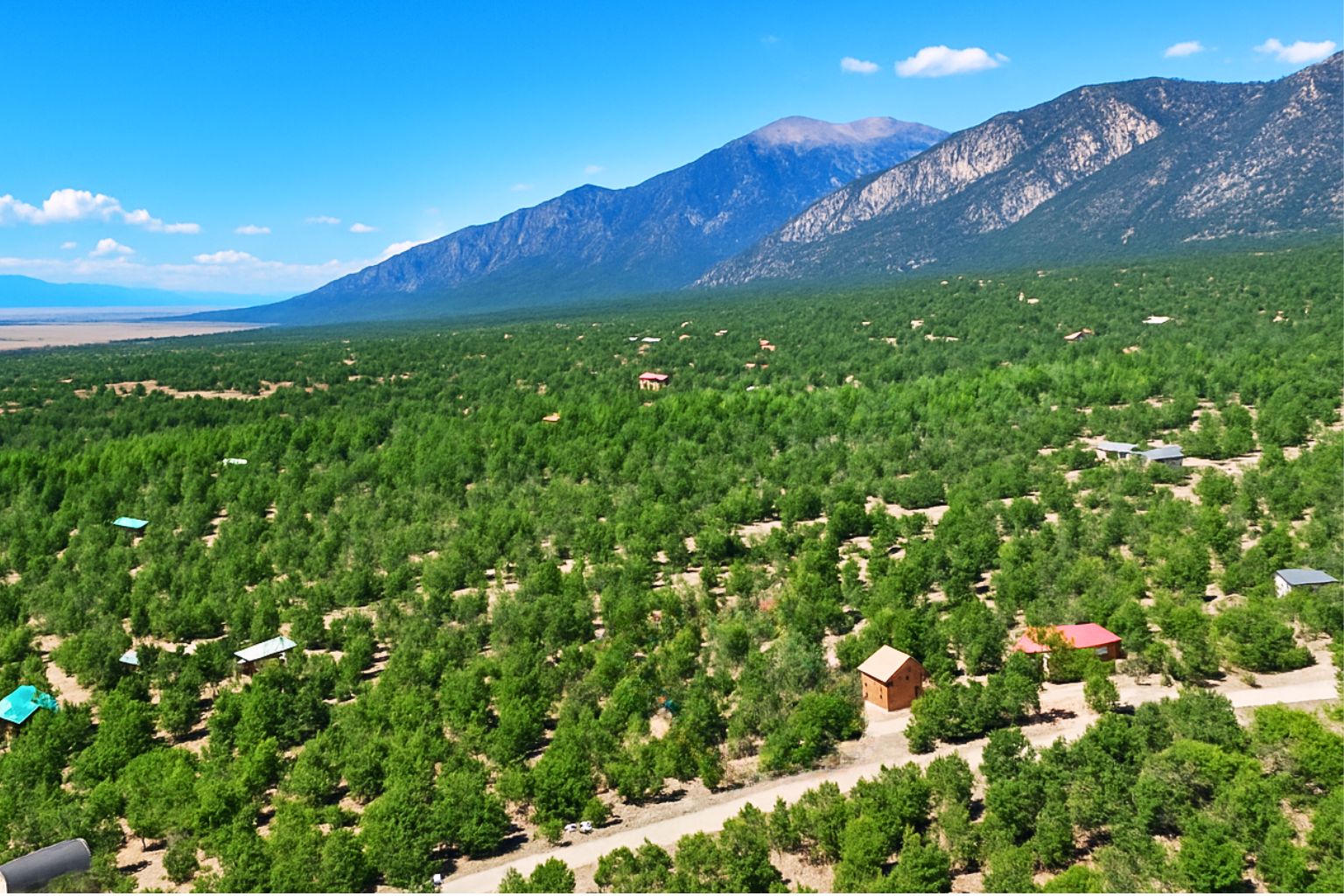
We ran all eight on a 0.44-acre lot in Crestone, Saguache County, listed at $9,399. Six came back clear and two need a phone call before you buy.
| Check | Result | What we found |
|---|---|---|
| Owner and taxes | Clear | Owner matched, taxes paid |
| Zoning, camping and POA | Clear | Homes OK, POA $690 a year |
| Legal access | Clear | Lone Pine Way, on the plat |
| Winter roads | Ask | Plowing not confirmed. Call Road and Bridge |
| Water | Clear | District water, $5,000 tap |
| Power | Clear | Underground, transformer at the lot |
| Wildfire and flood | Ask | No flood zone, fire rating still open |
| Septic and soil | Clear | Sewer at the lot, $5,000 tap, shallow rock |
You can see the Crestone listing or browse all our Colorado land.
What does a Colorado land scam look like?
Check 1 is the one that catches scams. We run these checks when we buy land too, and both of these deals looked routine until the title company stepped in.
A fake owner, 35.97 acres in Park County, August 2025. The seller answered our offer letter, negotiated hard and agreed on a price. When we called the title company to send our deposit, they told us the real owner had never agreed to sell. Someone had posed as him, and the title company caught it.
A silent seller, 0.14 acres in Denver County, April 2025. The seller would only email. She never picked up the phone and never answered the title company. After 13 days the title company dropped the file, and we walked away.
Send no money until the owner checks out, and pay through a title company. Our Land Buying 101 guide lists eight red flags of a land scam, and our list of questions to ask before buying land helps you spot a bad seller early.
Get the free Colorado Land Field Guide. It has a printable scorecard for your parcel and office links and phone numbers for all 64 Colorado counties.
Colorado land buying questions
Can I camp on my land in Colorado?
It depends on the county. Many Colorado counties don't allow camping on vacant land, or only allow it for a few weeks a year. Some allow an RV only with a permit, or once utilities are in. Call county planning with the parcel number and ask how many days a year you can camp.
How do I find out who owns a parcel in Colorado?
Search the parcel number on the county assessor's website. It shows the legal owner. Then search the same parcel on the county treasurer's site to see if the taxes are paid. Back taxes follow the land to the next owner.
Do I need a perc test to buy land in Colorado?
Not usually. Colorado's septic rule, Regulation 43, uses a soil test with test pits, and the old perc test is optional now. The county health department issues the septic permit, and some counties set a minimum lot size for septic.
Can I use a pond or creek on my land in Colorado?
Not automatically. Colorado water law runs on "first in time, first in right," so owners who filed long ago come first. Most rural buyers drill a well. Under 35 acres, a new well is usually for use inside the home only.
How long does it take to check Colorado land?
About 90 minutes for all eight checks, using free county and state websites. You need the county name and the parcel number. A few answers need a phone call to county planning or the road office.
Can I buy Colorado land with owner financing?
Yes, from Compass Land USA. There's no bank and no credit check, and there's no penalty for paying early. Terms run up to 5 years, and longer on higher-priced land, up to 10 years on land priced $90,000 and up. You can try your own numbers on our financing calculator.
Andrew
Co-founder, Compass Land USA
Andrew co-founded Compass Land USA after buying and selling land for years without needing a single bank. He's been on both sides of hundreds of owner-financed deals across five states.
You've Read Enough. Time to Own Something.
Ready to Stop Renting Your Life and Start Owning Something?
Browse available land in Arizona, Colorado, Florida, Nevada, and North Carolina. Owner financing on every parcel. No bank. No credit check. Close in days.