
Protect Yourself
Before You Buy
How Does Buying Vacant Land Actually Work? The Step-by-Step Process
You found a few parcels you like. Here's exactly what happens next, step by step, from budget to recorded deed.

How Does Buying Vacant Land Actually Work? The Step-by-Step Process
You've been scrolling land listings for weeks. You found a few parcels you like. But one question keeps stopping you: what actually happens after you say "I want this one"?
You're not alone. Buying land feels different from buying a house. There's no home inspection, often no realtor, and sometimes no bank. That's why so many first-time buyers ask us the same thing: how does buying land work?
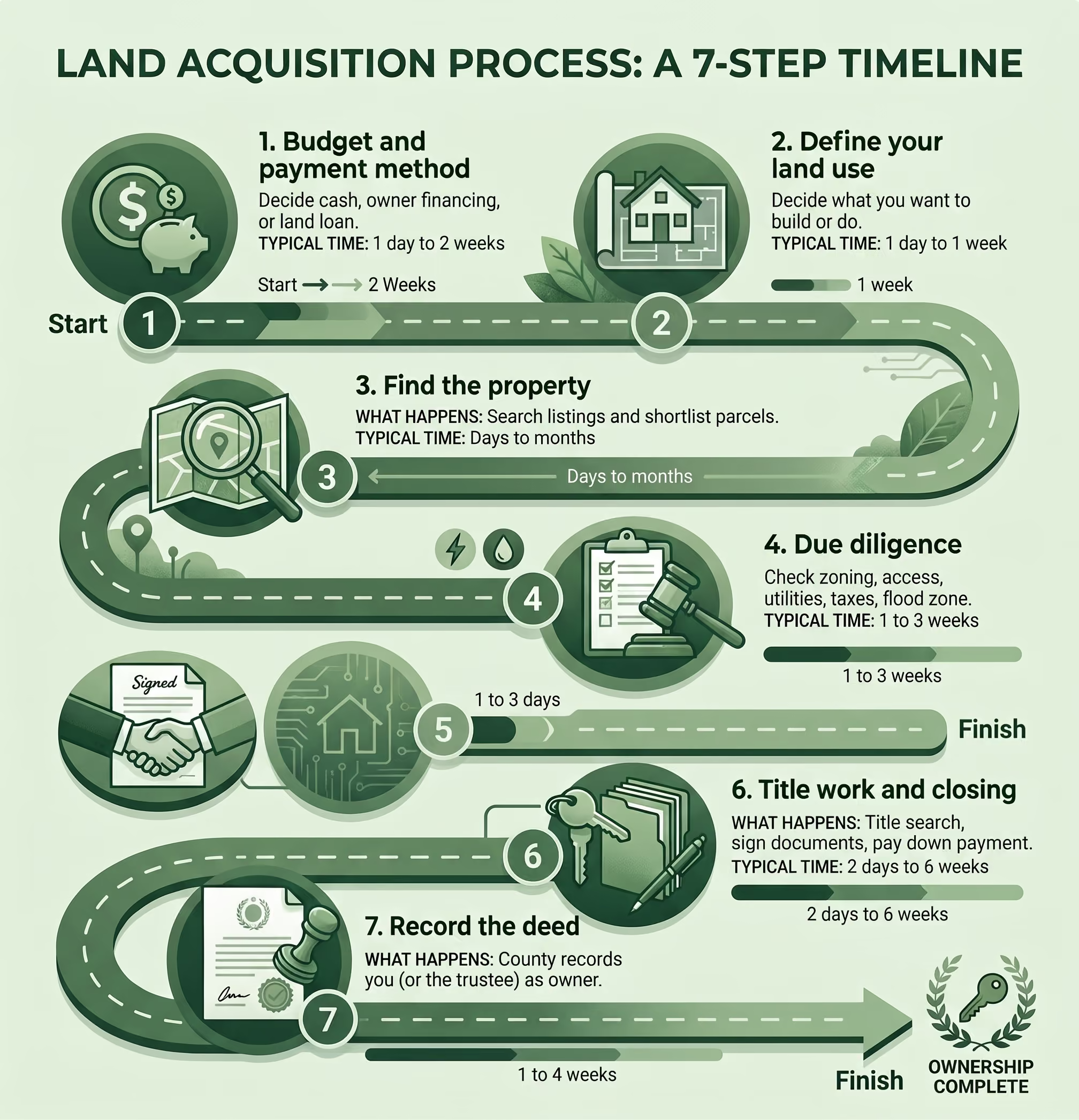
Buying vacant land is a seven-step process: set your budget and payment method, define how you'll use the land, find a property, complete due diligence, sign a purchase agreement, close through a title company or directly with the seller, and record the deed. A cash purchase usually closes in 2 to 6 weeks, and an owner-financed purchase can close in as little as a few days. According to the American Land Title Association, nearly 60% of real estate transactions have three to five title issues that must be fixed before closing, which is why the due diligence and title steps matter so much.
This guide walks you through the full land purchase process explained step by step. You'll see what happens at each stage, how long it takes, what it costs, and the mistakes that trip up new buyers.

The Land Buying Process at a Glance
Here is the whole land buying process step by step in one table. Each step gets its own section below, so you can jump to the part you need.
| Step | What Happens | Typical Time |
|---|---|---|
| 1. Budget and payment method | Decide cash, owner financing, or land loan | 1 day to 2 weeks |
| 2. Define your land use | Decide what you want to build or do | 1 day to 1 week |
| 3. Find the property | Search listings and shortlist parcels | Days to months |
| 4. Due diligence | Check zoning, access, utilities, taxes, flood zone | 1 to 3 weeks |
| 5. Purchase agreement | Agree on price and terms in writing | 1 to 3 days |
| 6. Title work and closing | Title search, sign documents, pay down payment | 2 days to 6 weeks |
| 7. Record the deed | County records you (or the trustee) as owner | 1 to 4 weeks |
The biggest variable is how you pay. A bank land loan adds appraisals and underwriting. A cash deal skips those. Owner financing skips them too, and it's often the fastest route of all.
Step 1: Set Your Budget and Decide How You'll Pay
Every land purchase starts with money. Before you fall in love with a parcel, you need to know two things: how much you can spend, and how you'll pay for it.
There are three main ways to pay for vacant land.
Cash. You pay the full price at closing. This is simple and fast. You own the land outright on day one.
Bank or credit union land loan. Banks see land as risky because there's no house on it to back the loan. That's why banks often ask for 20% to 40% down on raw land, plus a credit check, an appraisal, and a shorter loan term than a mortgage.
Owner financing. The seller acts as the bank. You pay a down payment, then make monthly payments to the seller. At Compass Land USA, that means no banks, no credit checks, no prepayment penalties, and no hassle. Custom plans are available up to 60 months.
| Cash | Bank Land Loan | Owner Financing | |
|---|---|---|---|
| Credit check | No | Yes | No (with CLUSA) |
| Typical down payment | 100% | 20% to 40% | Often a few hundred to a few thousand dollars |
| Appraisal required | No | Yes | No |
| Time to close | 2 to 6 weeks | 30 to 60+ days | A few days to 2 weeks |
| Total cost | Lowest | Interest plus loan fees | Interest over the plan term |
Don't forget the costs beyond the price. Plan for closing or document fees, recording fees, annual property taxes, and any future costs like a well, septic, or power.
According to Felicia, co-founder of Compass Land USA, most buyers who call her have already been turned down by a bank at least once. "People think they can't own land because a bank said no," she says. "That's exactly why owner financing exists. The land itself is the collateral, so your credit score isn't the thing standing between you and your property."
If owner financing sounds like a fit, our guide on owner financing for land buyers breaks down terms, interest, and what to ask a seller.
Step 2: Decide What You Want to Do With the Land
This step sounds obvious, but it's the one most beginners rush. What you plan to do with the land decides which parcels you should even look at.
Ask yourself a few simple questions:
- Do you want to build a house, cabin, or tiny home?
- Will you put a mobile or manufactured home on it?
- Do you want to camp or park an RV on weekends?
- Is this a long-term investment you'll hold and resell?
- Do you need power and water now, or can you go off-grid?
Your answers become your filter. A buyer who wants to live full-time in a manufactured home needs very different land than someone who wants a hunting spot. For example, many counties have minimum home sizes, and some subdivisions ban mobile homes entirely. Our guide on buying land for a mobile or manufactured home covers the hidden costs to watch for.
Write your goals down before you start searching. It keeps you from buying a pretty parcel that can't do what you need.
Step 3: Find the Right Property
Now the fun part: finding land. Vacant land is listed in different places than houses, and some of the best deals never show up on the big home sites.
Good places to search include:
- Land-focused marketplaces like LandWatch and Lands of America
- Direct land sellers and investor websites (like our current land listings)
- County tax sale and surplus land lists
- Local newspapers and "for sale by owner" signs
Our full guide on how to find land for sale online shows which sites work best and how to filter for owner financing.
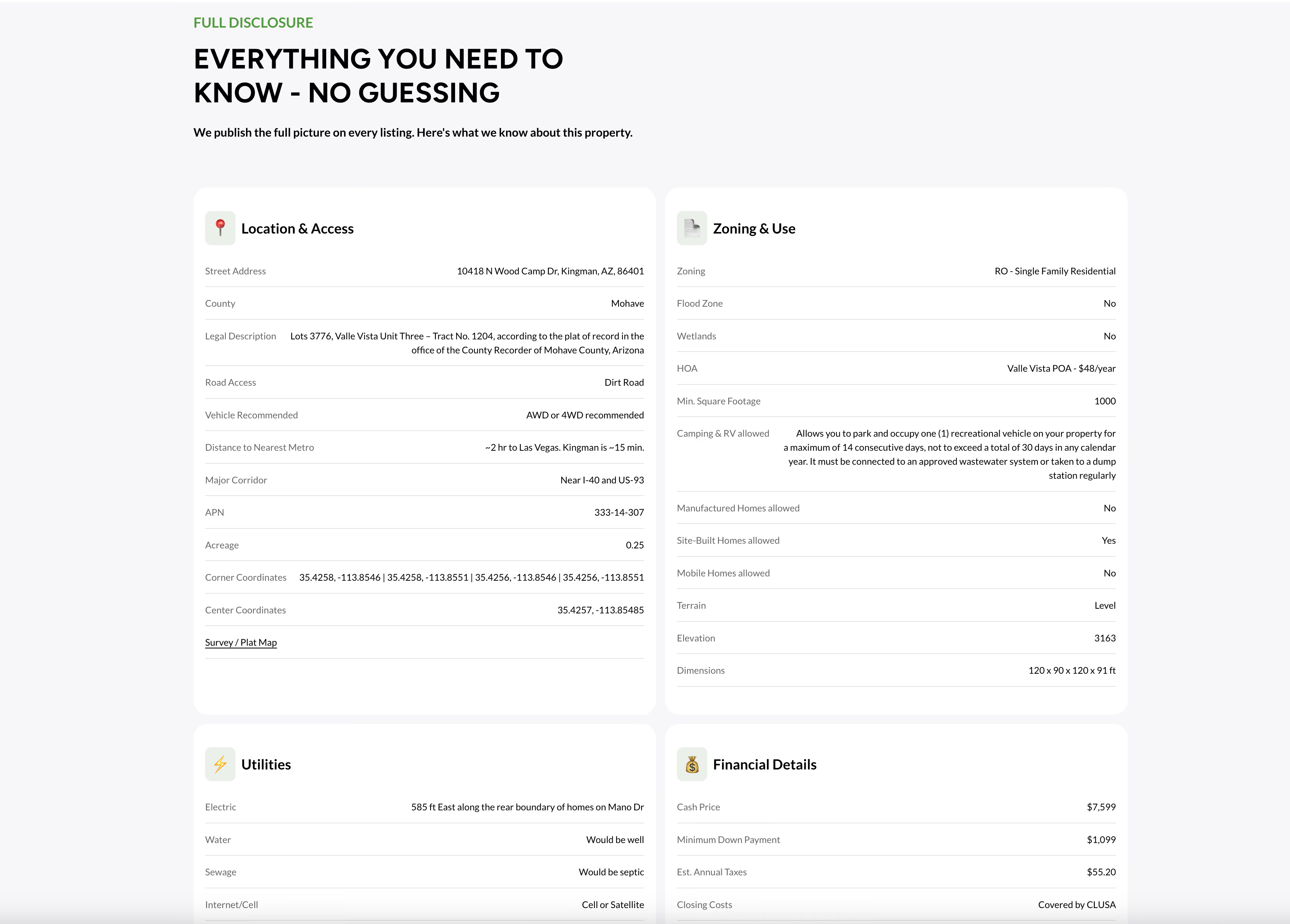
When you find a listing you like, look for a clear details block. A good listing tells you the power status, water source, road access type, zoning, HOA status, and whether camping or RVs are allowed. If a seller won't share that information, treat it as a warning sign.
Price matters too. According to the USDA National Agricultural Statistics Service, U.S. farm real estate averaged $4,350 per acre in 2025, while pastureland averaged $1,920 per acre. Rural desert and recreational parcels in the Southwest often sell for less than those national averages, which is one reason so many first-time buyers start in states like Arizona and New Mexico.
Step 4: Do Your Due Diligence Before You Commit
Due diligence means checking the property yourself before you buy it. With vacant land, there's no home inspector to do this for you. This is the step that protects your money.
Here is the core due diligence checklist for any vacant land purchase:
- Confirm who owns it. Make sure the seller is the legal owner of record. Here's how to check who owns a property for free.
- Check the zoning. Zoning decides what you can build and live in. Learn how to check the zoning of a property.
- Verify legal and physical access. You need a legal right to reach the land and a road you can actually drive. See how to check property access and get coordinates.
- Look up utilities. Find out if power, water, and septic are available or if you'll need solar, a well, or a cistern. Use our guide to checking utilities on land.
- Search for back taxes and liens. Unpaid taxes can follow the land to you. Here's how to check for back taxes and tax liens.
- Check the flood zone. Pull the FEMA map before you buy. Our guide to FEMA flood zones explained shows you how.
- Review slope and terrain. Steep land can make building expensive. Learn how to check slope and elevation for free.
- Ask about HOAs and deed restrictions. Some rules block RVs, mobile homes, or camping.
Most of this research is free and can be done online in an afternoon. The county assessor, the county GIS map, and the county recorder's office are your best friends here.
"We run every property we buy through the same checklist you'd run as a buyer. Zoning, access, taxes, flood zone, all of it. When a buyer calls us, the goal is to have the answers ready before they even ask. If a seller can't answer those questions, you should keep asking until someone can." Andrew, Co-founder of Compass Land USA
Not sure what to ask? Our list of 15 easy questions to ask before you buy land makes a great phone script for sellers.

Step 5: Make an Offer and Sign the Purchase Agreement
Once your research checks out, it's time to make it official. The purchase agreement is the written contract that locks in the deal. It's also where the land transaction really begins.
A land purchase agreement usually includes:
- The parcel number (APN) and legal description
- The purchase price
- The payment method: cash, loan, or owner financing terms
- The down payment or earnest money amount
- Who pays closing costs and fees
- The closing date or timeline
- Any contingencies, such as a survey or a perc test
For an owner-financed purchase, the agreement also spells out your monthly payment, interest rate, number of payments, and what happens if a payment is late.
Read every line before you sign. If something doesn't match what you discussed, ask for it to be fixed in writing. A good seller will explain anything you don't understand.
Pro Tip: Always match the parcel number (APN) on the contract to the APN you researched in Step 4. It's easy to research the parcel next door by mistake, especially in large rural subdivisions where lots look the same.
Step 6: Title Work and Closing
Closing is the moment money and paperwork change hands. This is what happens when you buy land, from a legal point of view. Most land deals close through a title company or an attorney, while some small owner-financed deals close directly with the seller.
Here's how a land transaction works during closing:
The title search. The title company searches public records for liens, unpaid taxes, and ownership gaps. According to a 2026 study by the American Land Title Association, nearly 60% of transactions need three to five title issues resolved before closing. That's why this step matters.
Title insurance. A title insurance policy protects you if an old claim on the property shows up later. Our guide on title insurance for vacant land explains when it's worth the cost.
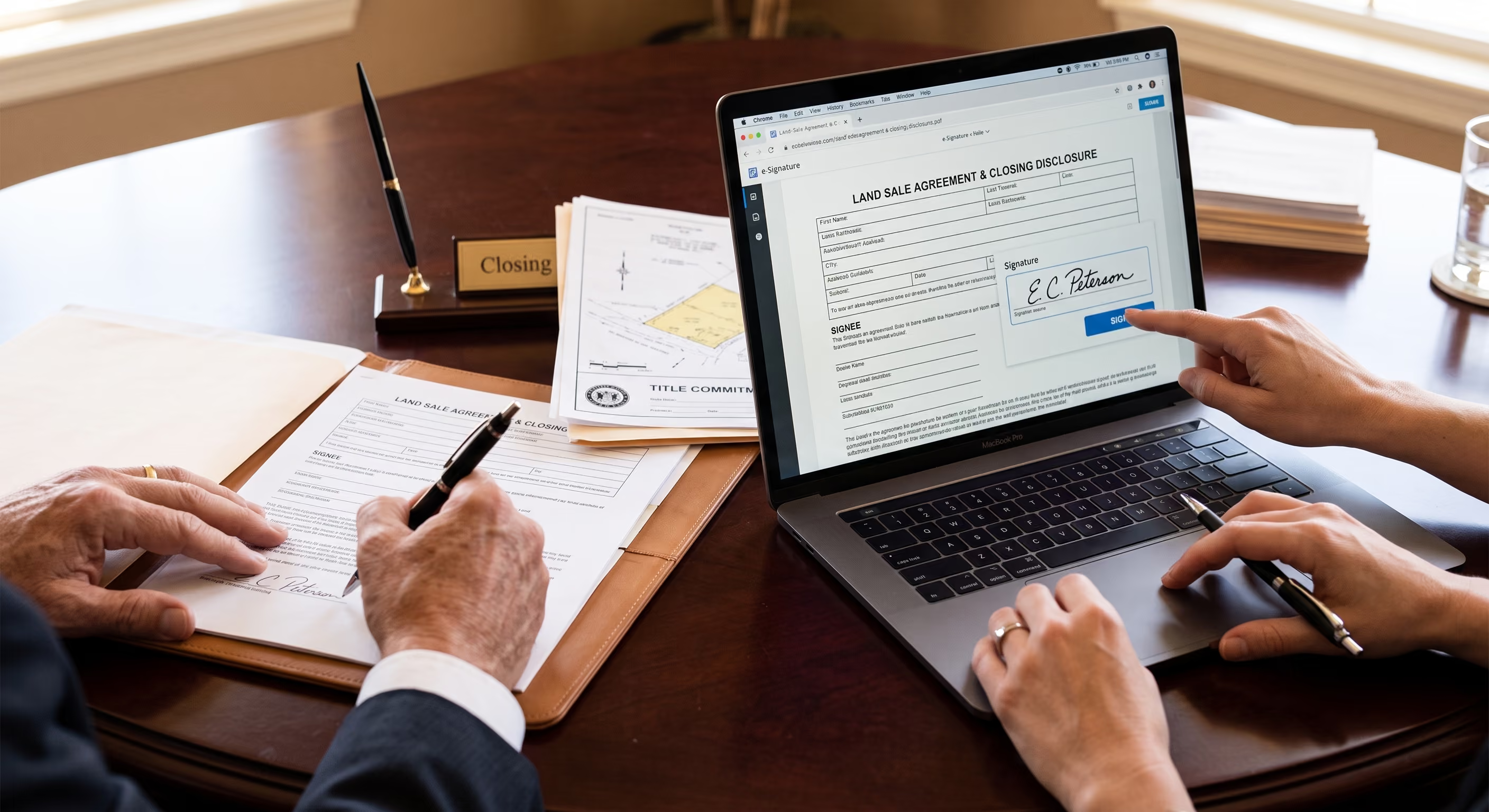
Signing the documents. For a cash sale, you sign the settlement statement and the seller signs the deed. For an owner-financed sale through a title company, you'll usually sign a promissory note, a deed of trust, and a deed. Learn what each one means in our guide to the 5 types of property deeds.
Paying the down payment and fees. You send your funds to the title company or seller. Most signing now happens online with tools like DocuSign, so you rarely need to travel.
Watch out for wire fraud during this step. The FBI's Internet Crime Complaint Center reported more than $275 million in real estate fraud losses in 2025, affecting over 12,000 victims. Always call your title company at a phone number you already know to confirm wiring instructions before you send money.
"Closing through a title company gives both sides an independent referee. The title company checks the paperwork, holds the documents, and makes sure everyone does what they promised. For a lot of our buyers, that's the moment the nerves go away." Felicia, Co-founder of Compass Land USA
Want the full owner-financed version of this step? Read how to buy owner financed land through a title company.
Step 7: Record the Deed and Take Ownership
The last step is recording. Recording means the deed is filed with the county recorder so the public record shows the new owner. Until it's recorded, the county doesn't officially know the land changed hands.
For a cash purchase, the title company or seller records the deed right after closing. Recording times vary by county. Some take a day. Busy counties can take several weeks.
For an owner-financed purchase, recording depends on how the deal was set up. When a title company handles the deal, ownership transfers at signing, and a trustee holds the deed of trust until you pay in full. When the seller carries the note directly, the seller often keeps the deed until your last payment, then records it in your name.
Either way, ask for copies of every signed document and keep them somewhere safe.
After recording, a few things change:
- You pay the property taxes. Find out the annual amount and due dates.
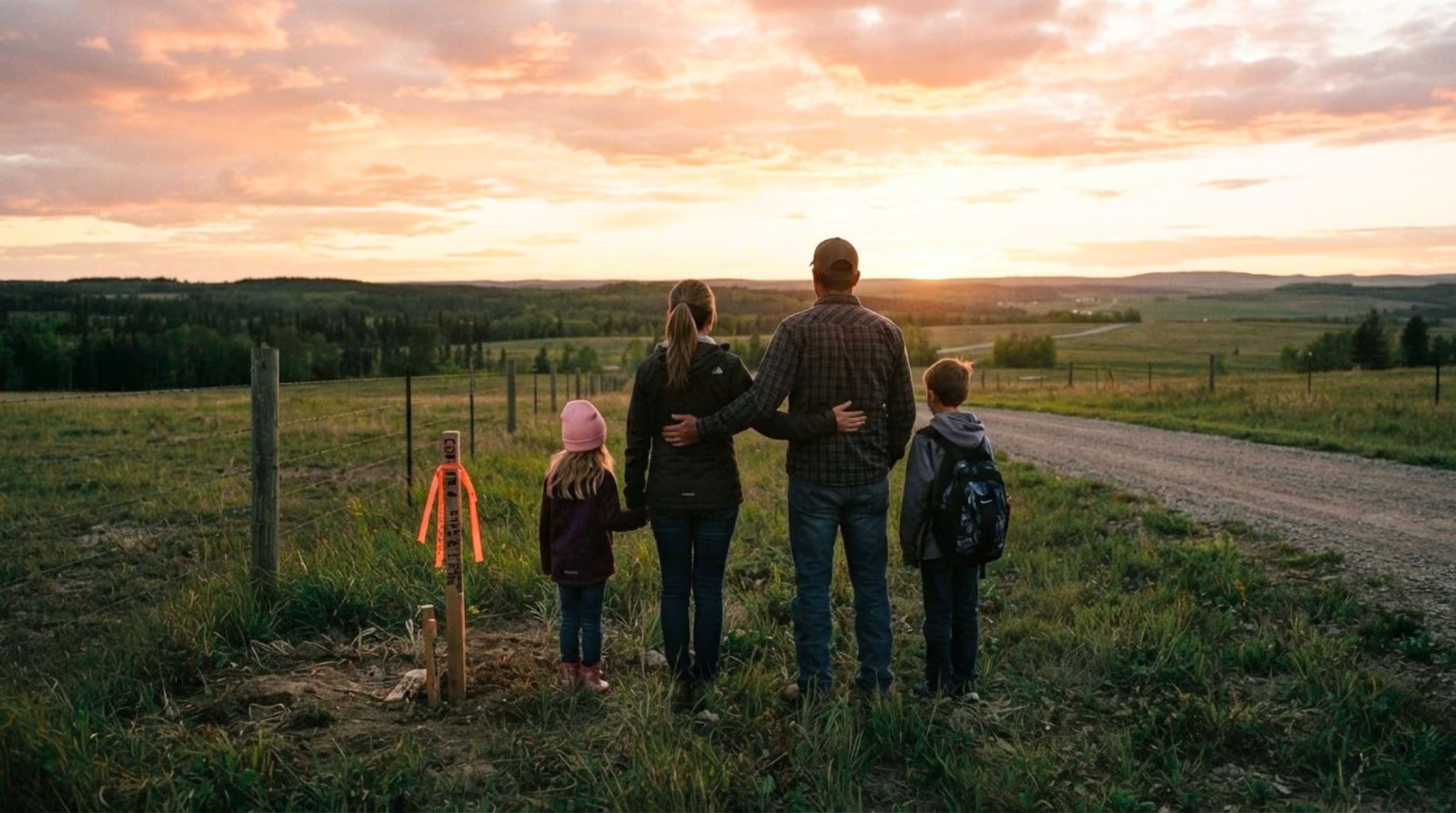
- You can start using the land. With many owner-financed deals, including ours, you can camp, visit, and enjoy the property while you make payments. Building usually waits until you meet the county's permit rules.
- You start planning. Walk the property lines, find your corner markers, and map out where a driveway, camp spot, or future build could go.
[IMAGE: Photo of a family standing at the corner marker of their new rural parcel at sunset, shot from behind | Alt: what happens when you buy land - new landowners visiting their recorded vacant land parcel]
How Long Does It Take to Buy Vacant Land?
The vacant land purchase timeline depends mostly on how you pay. Here's what we see in real deals.
| Payment Method | Typical Timeline | Why |
|---|---|---|
| Owner financing | A few days to 2 weeks | No bank, no appraisal, no underwriting |
| Cash | 2 to 6 weeks | Title search and closing prep |
| Bank land loan | 30 to 60+ days | Appraisal, underwriting, lender conditions |
Your due diligence adds time on top of this. Plan on one to three weeks to do it right. Surveys and perc tests can add several more weeks if you order them.
Andrew points out that the fastest deals are the ones where the seller has already done the homework. "When the zoning, access, and tax info is already on the listing, a buyer can verify it in a day or two," he says. "The slow deals are the ones where nobody knows the answers yet."
Common Mistakes First-Time Land Buyers Make
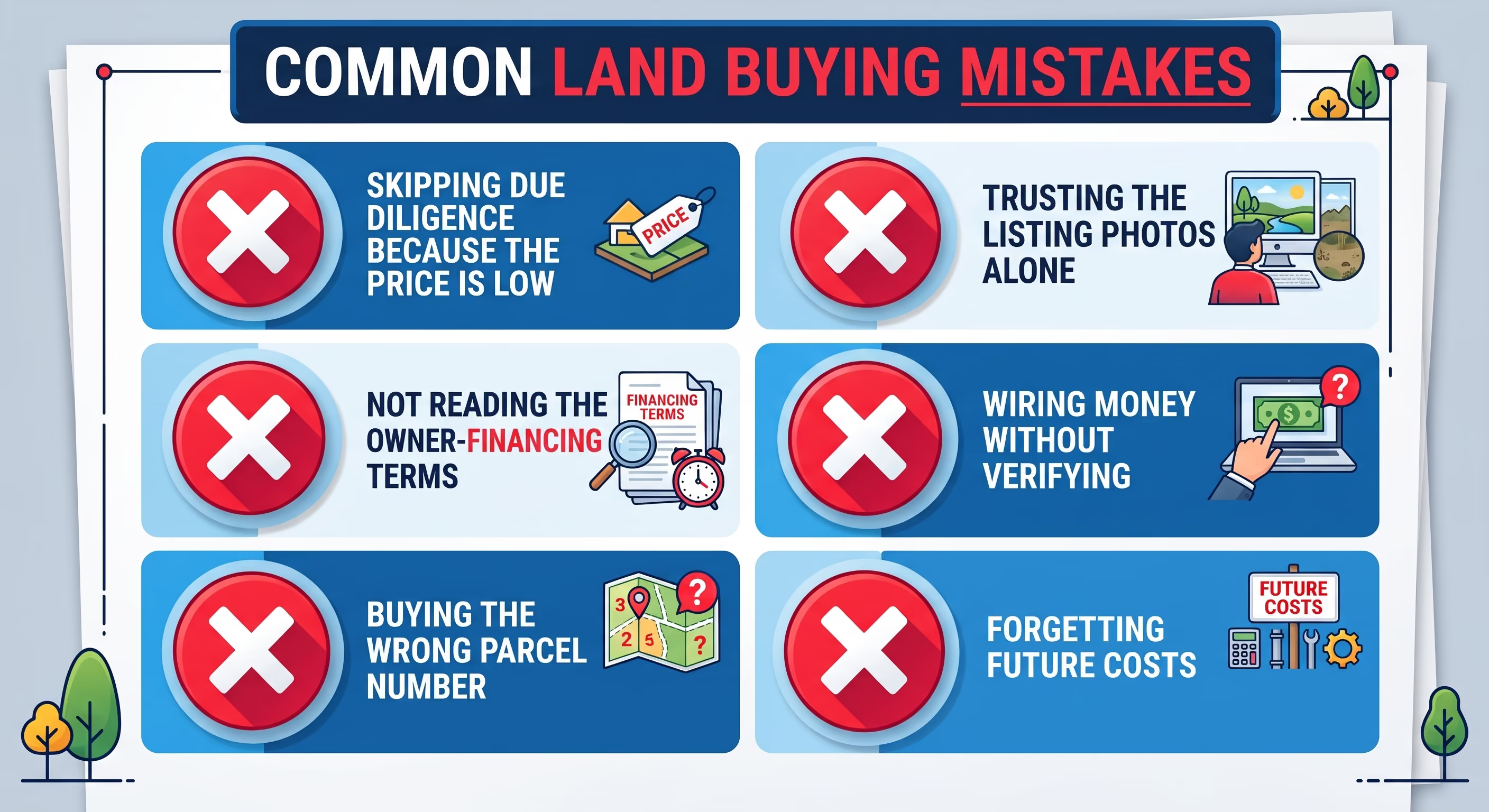
Knowing how to buy vacant land for beginners also means knowing what not to do. These are the mistakes we see most often.
Skipping due diligence because the price is low. A cheap parcel with no legal access is not a deal. It's a problem you pay taxes on every year.
Trusting the listing photos alone. Photos don't show zoning, easements, or flood zones. Always check the county records yourself.
Not reading the owner-financing terms. Know your interest rate, payment amount, late fees, and what happens if you miss a payment.
Wiring money without verifying. Always confirm wiring instructions by phone with a number you already have.
Buying the wrong parcel number. Match the APN on the contract to the one you researched.
Forgetting future costs. Wells, septic, power lines, and driveways can cost more than the land. Budget for them early.
Felicia puts it simply: "The process of buying raw land isn't hard. It just has more steps you have to do yourself. Buyers who slow down during due diligence almost never regret their purchase."
For state-specific pitfalls, see our guides on how to buy Arizona land and how to buy Colorado land.
Frequently Asked Questions
How does buying land work?
Buying land works in seven steps: set your budget and payment method, decide how you'll use the land, find a property, do your due diligence, sign a purchase agreement, close, and record the deed. The main difference from buying a house is that you handle more of the research yourself, since there's no home inspection. You can pay cash, get a bank land loan, or use owner financing.
What are the steps to buying vacant land?
The steps to buying vacant land are: budget, define your land use, search for property, complete due diligence (zoning, access, utilities, taxes, flood zone), sign the purchase agreement, close through a title company or seller, and record the deed with the county. Each step protects you from a different risk. Skipping due diligence is the most common and costly mistake.
How does a land transaction work from start to finish?
A land transaction starts when buyer and seller agree on price and terms in a written purchase agreement. The title company or seller then checks the title, prepares the deed and any financing documents, and collects the buyer's funds. After both sides sign, the deed is recorded with the county. With owner financing, the buyer then makes monthly payments to the seller or title company.
How long does it take to buy vacant land?
Most vacant land purchases take between a few days and two months. Owner-financed deals can close in a few days because there's no bank involved. Cash deals usually take two to six weeks, and bank land loans often take 30 to 60 days or more. Plan an extra one to three weeks for your own due diligence.
What happens between making an offer and owning the land?
After your offer is accepted, you sign a purchase agreement, finish any due diligence, and the title company or seller runs a title search. Then you sign closing documents and pay your down payment or full price. Finally, the deed is recorded with the county. With owner financing, you can often start using the land right after closing while you make payments.
What do I need to buy vacant land?
You need a way to pay (cash, a land loan, or owner financing), a government-issued ID, and a clear idea of how you'll use the land. You'll also want the parcel number (APN) so you can research zoning, access, taxes, and flood zone. With Compass Land USA owner financing, you don't need a credit check or a bank approval.
Can I buy land with no credit check?
Yes. Many land sellers, including Compass Land USA, offer owner financing with no credit check. You pay a down payment and then monthly payments directly to the seller, with plans up to 60 months and no prepayment penalty. Our guide on how to buy owner financed land walks through the full process.
Do I need a realtor to buy land?
No. Many land purchases happen directly between buyer and seller, with a title company handling the closing. A realtor can help, but they aren't required. Whether you use a realtor or not, do your own due diligence and have a title company or attorney review the paperwork.
Your Land Buying Journey Starts With One Step
Buying vacant land isn't complicated once you see the whole path. You set a budget, know your goals, find the right parcel, check it carefully, and close with clear paperwork. Each step builds on the last.
The fact that you're reading this puts you ahead of most first-time buyers. You don't have to figure it all out alone.
If you have questions about how buying land works, or you want help with a specific property, call or text Andrew anytime at (313) 349-0434. You can also browse our available land for sale at compasslandusa.com, where every listing shows power, water, access, zoning, and HOA details up front.
Happy land hunting!
Andrew
Co-founder, Compass Land USA
Andrew co-founded Compass Land USA after buying and selling land for years without needing a single bank. He's been on both sides of hundreds of owner-financed deals across five states.
You've Read Enough. Time to Own Something.
Ready to Stop Renting Your Life and Start Owning Something?
Browse available land in Arizona, Colorado, Florida, Nevada, and North Carolina. Owner financing on every parcel. No bank. No credit check. Close in days.