
Protect Yourself
Due Diligence
Tiny Homes on Vacant Land: Legal Requirements, Zoning, and What Actually Works
Want to put a tiny home on your vacant land? Learn the zoning laws, permit requirements, and legal steps that actually work. Real answers from Compass Land USA.

Tiny Homes on Vacant Land: Legal Requirements, Zoning, and What Actually Works
You bought the land. Or you're about to. Either way, you have a vision: a tiny home sitting on your property, on your terms, no landlord in sight.
It's a real goal. Thousands of people are doing it. But the rules are not the same everywhere, and skipping the research upfront can cost you time, money, and serious frustration.
Placing a tiny home on vacant land means navigating zoning codes, building permits, utility requirements, and state laws that vary wildly from one county to the next. In some places, you can have a tiny home on wheels set up and livable in weeks. In others, minimum square footage laws and strict permitting will slow you down for months.
This guide cuts through the confusion. We cover what the law actually cares about, what makes some situations easy and others difficult, and how to find land that works for the way you want to live.
What Is a Tiny Home on Vacant Land? (The Legal Definition That Matters)
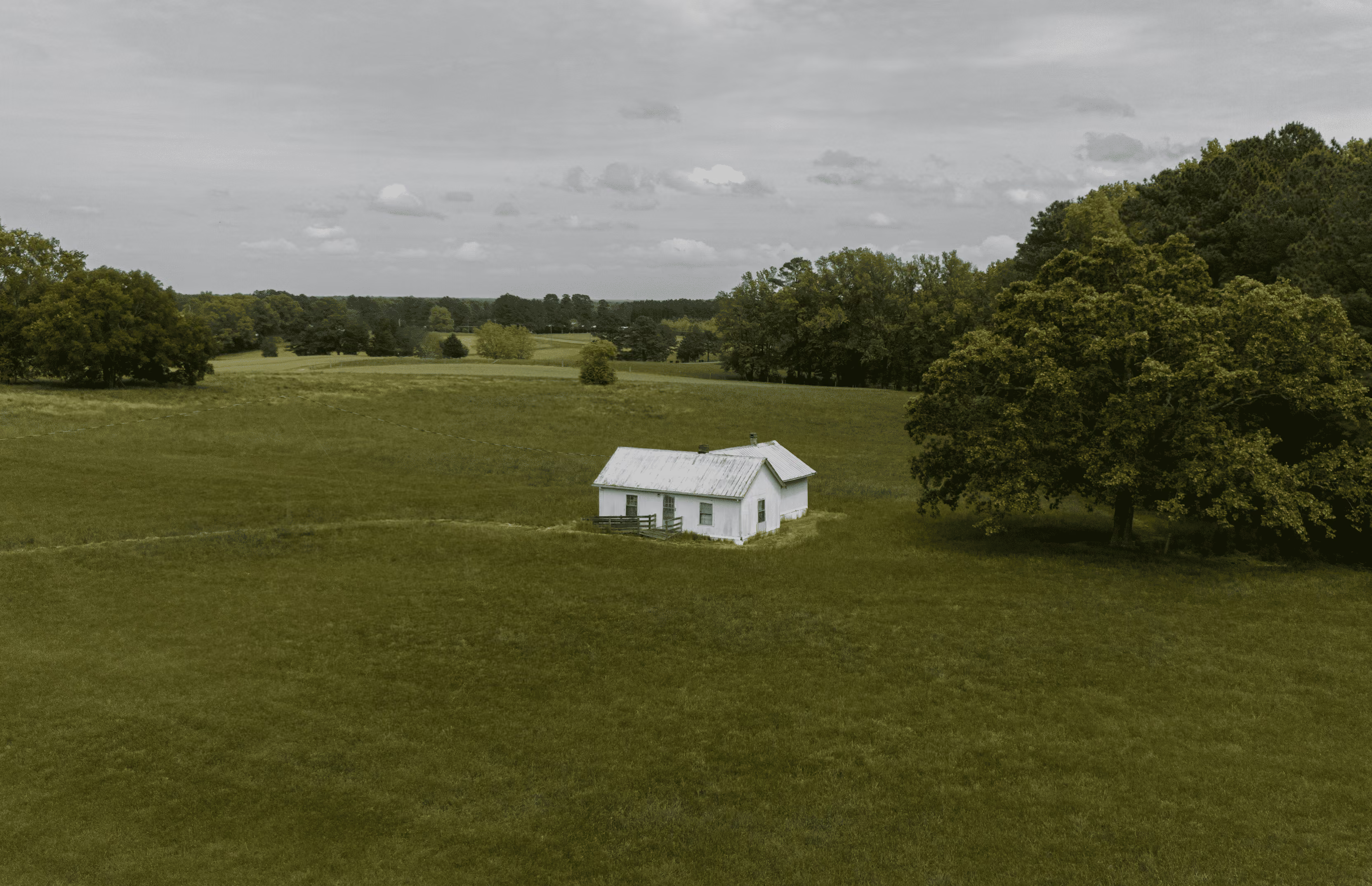
A tiny home on vacant land is a compact dwelling, typically under 400 square feet, placed on a rural or undeveloped parcel that has no existing structures. Tiny homes are classified in two main ways under U.S. law: as recreational vehicles (if on wheels) or as permanent structures (if built on a foundation). This classification determines which regulations apply, what permits are required, and whether the dwelling can be used as a primary residence. According to the American Tiny House Association, approximately 10,000 tiny homes are built or sold in the United States each year, with demand highest in western states where land is more accessible.
Understanding which category your tiny home falls into is the most important first step. Everything else flows from that answer.
Tiny Home on Wheels vs. Built on a Foundation: The Difference That Drives Everything
This is the fork in the road. Your entire legal situation depends on which type of tiny home you have.
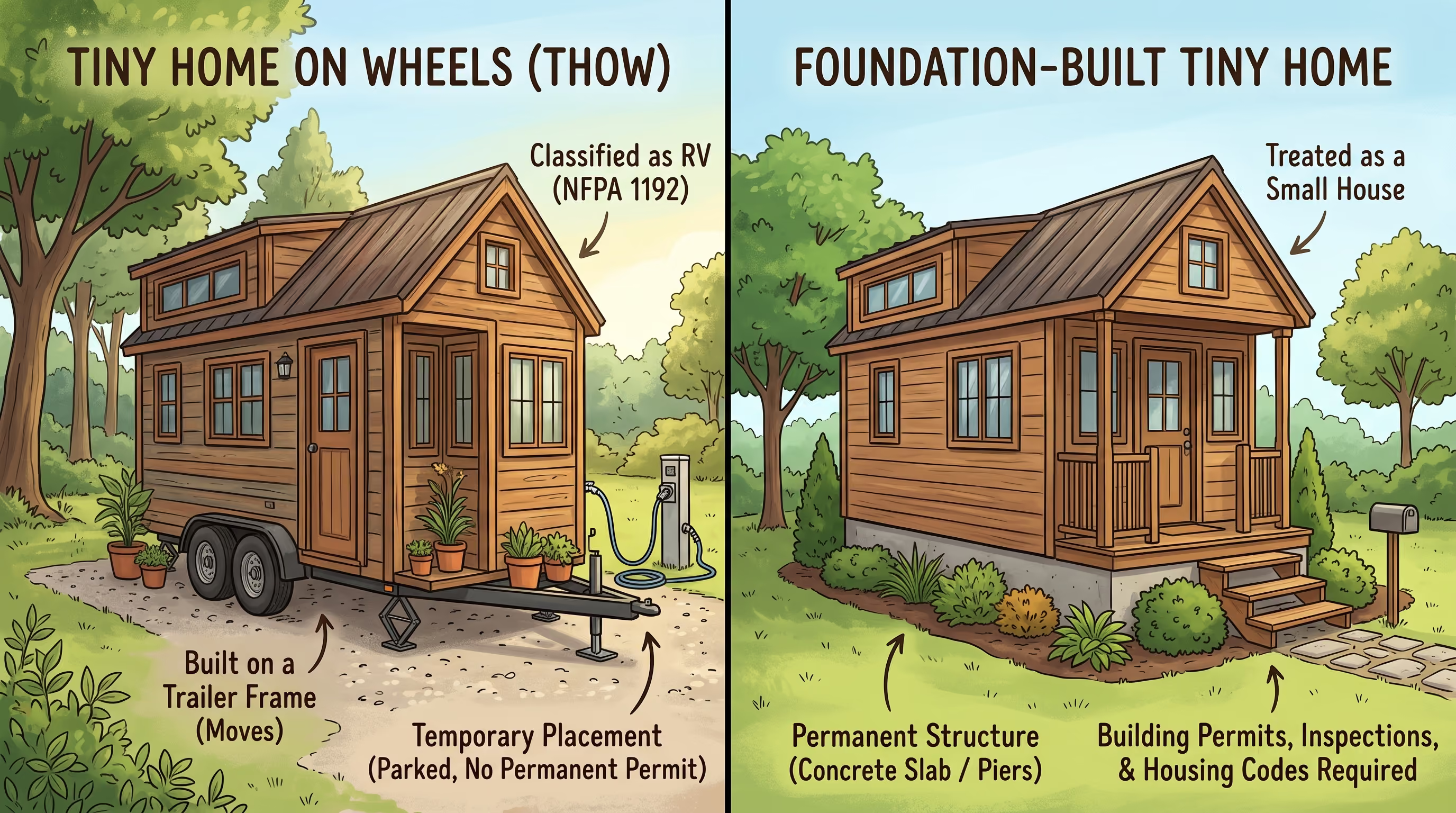
Tiny homes on wheels (THOWs) are built on a trailer frame. They move. Most states classify them as RVs under the National Fire Protection Association (NFPA) 1192 standard. That means they are not considered permanent dwellings. You park them rather than permit them as homes.
Foundation-built tiny homes are permanent structures. They sit on a concrete slab, piers, or a crawl space. Legally, they are treated the same as any small house. That means building permits, inspections, and compliance with local housing codes.
Here is a quick breakdown:
FeatureTiny Home on Wheels (THOW)Foundation-Built Tiny HomeLegal ClassificationRV / Recreational VehiclePermanent DwellingPermit Required?Usually not (parking rules apply)Yes, building permit requiredMinimum Square Footage LawsGenerally do not applyApply in most countiesCan Be Primary Residence?Depends on county RV ordinanceYes, if permittedFinancingHarder to financeStandard construction loansResaleMoves with youStays on property
According to Andrew, co-founder of Compass Land USA, the question of wheels vs. foundation is the first thing buyers need to settle before they shop for land. "We help buyers across Arizona, Colorado, Florida, and Nevada," he says. "The counties in each state have completely different rules. A THOW that's totally legal in one county might get you a citation three counties over."
Zoning Laws: The Real Gatekeeper for Tiny Homes on Vacant Land
Zoning is what determines what you can do with your land before you ever break ground or park a trailer.
Most counties zone land into categories: residential, agricultural, rural residential, and unincorporated rural. Each category has its own rules about what structures are allowed.
Agricultural and rural zones are often the most flexible. Many counties in the West allow THOWs, manufactured homes, and unconventional dwellings on agricultural parcels with no HOA restrictions. This is a big reason CLUSA focuses on states like Arizona, Colorado, and Nevada for buyers who want flexibility.
Residential zones are stricter. Minimum square footage requirements, setback rules, and design standards all apply. In many suburban residential zones, a tiny home on a foundation would need to meet the same codes as a full-sized house.
Unincorporated areas sit outside city limits and often have lighter oversight. County codes still apply, but enforcement is frequently more relaxed.
Before you buy land, always check the property's zoning with the county assessor or GIS portal. This one step can save you from a very expensive mistake.
According to Felicia, co-founder of Compass Land USA, "One thing buyers often miss is that zoning can change between parcels on the same road. We've seen two lots side by side with different zoning codes. Always verify for the specific parcel, not the area."
For a full walkthrough of how to read and verify zoning before you buy, see our guide to buying vacant land the right way.

Minimum Square Footage Rules: How Small Can You Actually Go?
This is where a lot of tiny home buyers run into a wall.
The International Residential Code (IRC) sets a floor of 120 square feet for habitable space in a dwelling unit, with at least one room of 70 square feet or more. Many counties adopt the IRC, which means a tiny home on a foundation legally needs at least 120 square feet of livable space.
But counties add their own rules on top of that. Some require 400 square feet. Some require 600. A few require 1,000 square feet or more in residential zones.
As of 2026, 36 states have adopted some form of tiny home or alternative dwelling legislation, but adoption is uneven. State law might allow tiny homes while individual county codes still impose minimums that make them hard to build legally.
Where this gets confusing: Minimum square footage rules almost always apply to foundation-built tiny homes. They generally do not apply to THOWs, which are classified as RVs. So if your goal is a sub-200-square-foot space and you want to avoid red tape, a THOW may be the easier path, as long as your land is in a county that allows RV or seasonal occupancy.
The states where CLUSA operates, including Arizona, Colorado, and Nevada, tend to have more flexible county-level rules than the national average. That's part of why we concentrate there.
For related context on what's allowed when you own raw land, check our guide on building on raw land.
Permits and Inspections: What You Need Before You Move In
This section trips up a lot of buyers who think they can move in first and sort out permits later. That approach leads to fines, forced removal, and in some cases, having to tear down what you built.
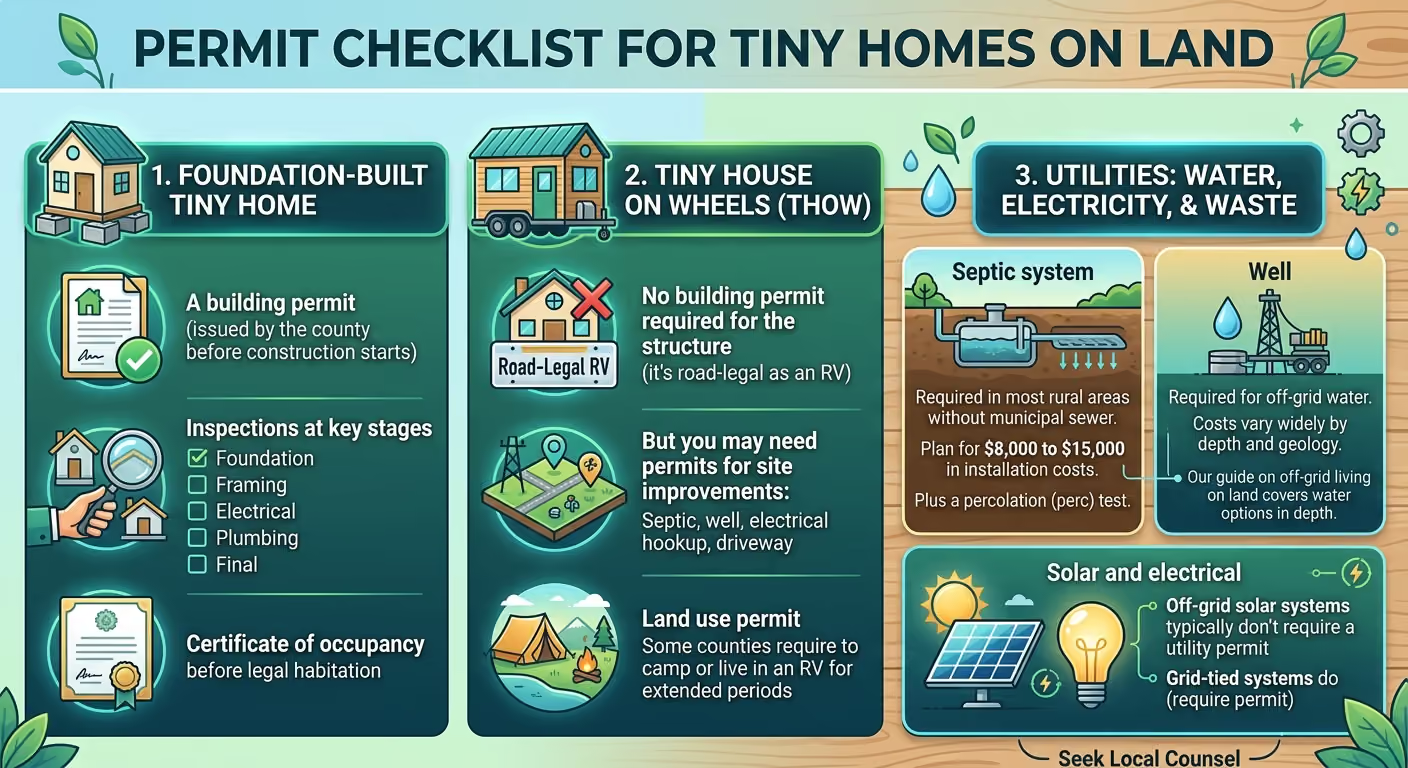
For a foundation-built tiny home, you will need:
- A building permit (issued by the county before construction starts)
- Inspections at key stages (foundation, framing, electrical, plumbing, final)
- Certificate of occupancy before legal habitation
For a THOW, the permit picture looks different:
- No building permit is required for the structure itself (it's road-legal as an RV)
- But you may need permits for site improvements: septic, well, electrical hookup, driveway
- Some counties require a land use permit to camp or live in an RV for extended periods
Utilities matter regardless of dwelling type. If you want water, electricity, and waste handling, each requires its own permit or approval:
- Septic system: Required in most rural areas without municipal sewer. Plan for $8,000 to $15,000 in installation costs, plus a percolation (perc) test.
- Well: Required for off-grid water. Costs vary widely by depth and geology. Our guide on off-grid living on land covers water options in depth.
- Solar and electrical: Off-grid solar systems typically don't require a utility permit, but grid-tied systems do.
Our full guide to doing your due diligence on vacant land covers permit research as part of the buying process.
Which States Are Most Tiny Home-Friendly?
The short answer: western states generally win.
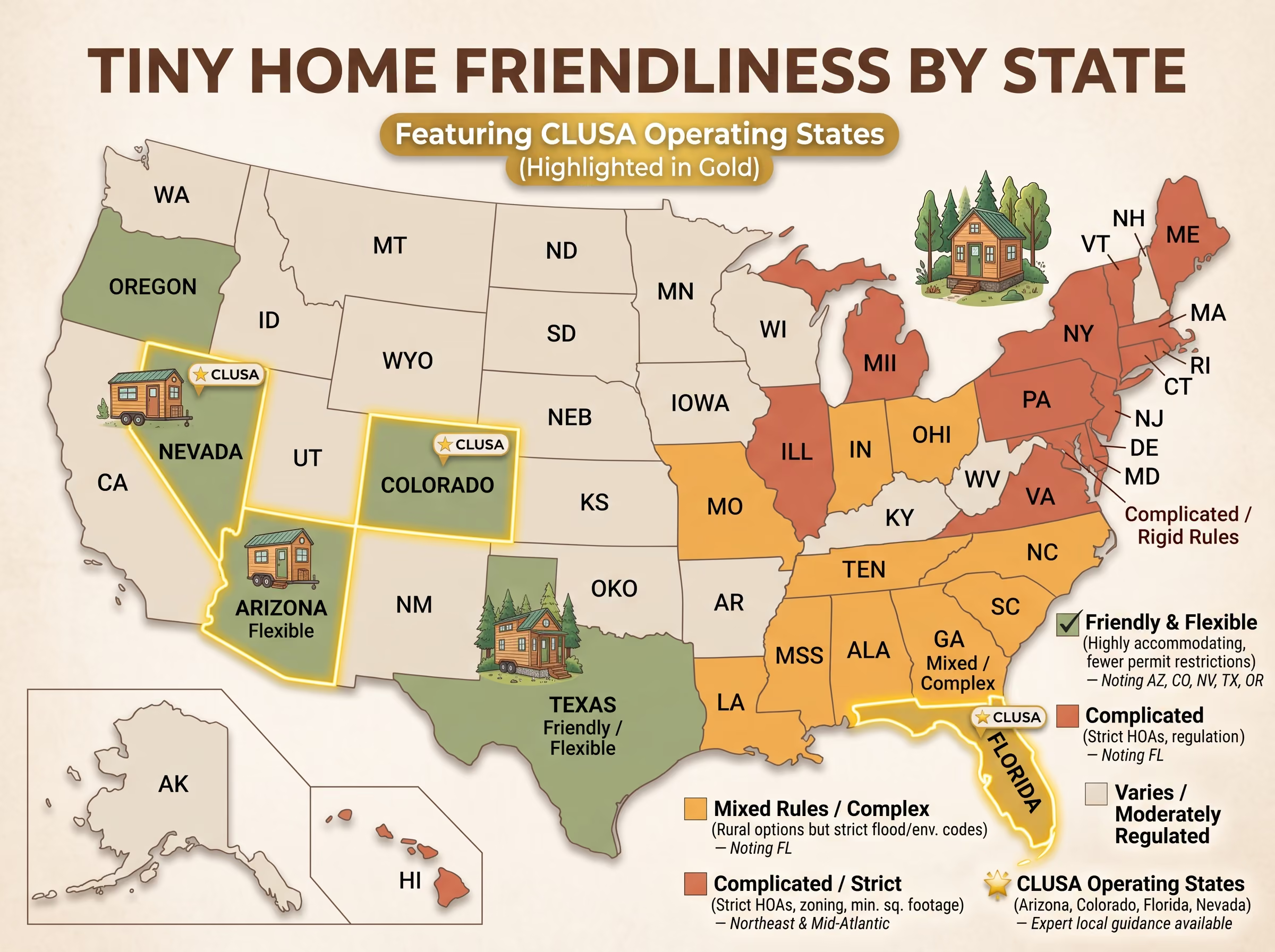
States with relatively flexible tiny home rules include Arizona, Colorado, Texas, Oregon, and Nevada. These states have a combination of rural land availability, flexible county zoning, and a growing body of tiny home-friendly legislation. Many unincorporated areas in these states allow seasonal or full-time RV occupancy with minimal permit requirements.
States where things get complicated include much of the Northeast, parts of the Midwest, and densely populated coastal areas. Minimum square footage requirements, strict HOA rules, and residential zoning that doesn't accommodate non-traditional dwellings all create friction.
Florida is a mixed picture. Parts of rural Florida allow THOWs on agricultural land with relatively few restrictions. But flood zone requirements and environmental regulations add complexity. Our guide to buying land in Florida goes into the state-specific rules.
The counties in Arizona and Colorado where we have properties are among the most accessible for buyers who want to put a tiny home on vacant land without fighting city hall. We know the local rules in our operating markets because we've worked with buyers on exactly these questions since 2017.
What to Look for When You Buy Land for a Tiny Home
Not all land works for a tiny home, even in flexible states. Here is what to check before you sign:
Zoning type: Agricultural or rural residential zones give you the most flexibility. Avoid land zoned strictly residential if you plan a non-traditional structure.
County rules on RV occupancy: If you plan a THOW, confirm whether the county allows it as a primary residence or only for seasonal use. This is a phone call to the county planning department. It takes 10 minutes.
Road access: Year-round access matters. A dirt road that gets muddy in winter can cut you off from your own property. See our guide to checking property access for what to look for.
Water and power options: Many rural parcels have no utilities. Confirm whether the parcel can support a well and septic system before you buy. Some land has soil that fails a perc test, which means you cannot legally install a conventional septic system.
HOA restrictions: Some rural areas have deed restrictions or homeowner associations. Always ask. Many of our properties are HOA-free, which is one reason buyers choose CLUSA.
Andrew says this about the process: "We walk buyers through every one of these questions before they put money down. We have been doing this since 2017, and we have seen buyers skip the zoning check or access check and regret it. Those are the conversations we try to have up front so there are no surprises."
Browse our current inventory of land for sale with owner financing across Arizona, Colorado, Florida, and Nevada.

Frequently Asked Questions
Can I put a tiny home on my vacant land?
Yes, in many cases. Whether you can depends on three things: the zoning of the parcel, your county's rules for the type of tiny home you have, and what permits are required for any site improvements like water and septic. Agricultural and rural zones tend to be the most flexible. Start with a call to your county planning department to confirm what is allowed before you buy.
Is a tiny home on wheels classified as an RV?
In most states, yes. Tiny homes on wheels are built on trailer chassis and registered under NFPA 1192, the same standard as recreational vehicles. This means they are classified as RVs rather than permanent dwellings. Some counties allow RVs as full-time residences. Others allow only seasonal occupancy. Confirm the county's rules before you commit to a THOW on a specific parcel.
What is the minimum square footage for a tiny home?
The International Residential Code sets a floor of 120 square feet of habitable space for a foundation-built dwelling. Many counties adopt the IRC directly, but some impose higher minimums: 400, 600, or even 1,000 square feet in residential zones. Minimums generally do not apply to THOWs, which are classified as RVs. Check your specific county's rules, not just the state law, because county-level codes vary significantly even within the same state.
Where can I legally live in a tiny home full time?
States like Arizona, Colorado, Texas, Oregon, and Nevada have relatively flexible rules that make full-time tiny home living more accessible, especially in unincorporated rural areas. Within those states, the specific county matters. Some counties in Arizona, for example, allow year-round RV occupancy on rural parcels. Others require a permanent structure for full-time habitation. The answer is almost always a county-level question, not just a state-level one.
Do I need a permit for a tiny home on my land?
It depends on the type of tiny home. A foundation-built tiny home requires a building permit before construction begins. A THOW does not require a building permit, but you will need permits for any site work: septic installation, well drilling, electrical hookups, and driveway improvements may each require their own permit. Doing this work without permits can result in fines, orders to remove the structure, or problems when you try to sell the land later.
Can I get owner financing on land for a tiny home?
Yes. Compass Land USA offers owner financing on all of our properties with no bank involvement, no credit check, and no prepayment penalty. You make monthly payments directly to us. Many buyers use our land as the foundation for their tiny home or THOW setup. See our owner financing page for how it works.
What is the difference between a tiny home and a manufactured home?
A manufactured home is built to HUD code in a factory and delivered to a site. It is a permanent structure that typically requires a foundation and complies with federal construction standards. A tiny home is a broader category that includes THOWs and foundation-built structures under 400 square feet. Manufactured homes are more widely accepted in county zoning codes because they have federal certification. For more on manufactured homes as an option, see our guide to manufactured homes on land.
The Bottom Line
Putting a tiny home on vacant land is possible, and people are doing it across the country. The key is doing your homework before you buy.
Zoning, county rules for your type of dwelling, and permit requirements are all things you can research. None of it is impossible to figure out. And choosing land in a flexible state and county makes the whole process much smoother.
At Compass Land USA, we help buyers find land that fits what they actually want to do with it. We have been doing this since 2017, with more than 800 properties sold across Arizona, Colorado, Florida, and Nevada.
If you have questions about whether a specific parcel works for your tiny home plans, call or text Andrew anytime at (313) 349-0434. There is no pressure and no sales pitch. We will tell you what we know.
You can also browse our current properties and view land for sale in Arizona and Colorado to start with areas that tend to work well for tiny home buyers.
Your land. Your home. Your terms.
Andrew
Co-founder, Compass Land USA
Andrew co-founded Compass Land USA after buying and selling land for years without needing a single bank. He's been on both sides of hundreds of owner-financed deals across five states.
You've Read Enough. Time to Own Something.
Ready to Stop Renting Your Life and Start Owning Something?
Browse available land in Arizona, Colorado, Florida, Nevada, and North Carolina. Owner financing on every parcel. No bank. No credit check. Close in days.