

Protect Yourself
Protect Yourelf
Title Insurance for Vacant Land: Do You Need It and What Does It Cover?
You found a piece of land you love. Before you sign, here's what title insurance covers, how much it costs, and whether you need it.

Title Insurance for Vacant Land: Do You Need It and What Does It Cover?
You found a piece of land you love. The price is right, the location works, and you can already picture building something there.
Before you sign the purchase agreement, there is a question worth asking: do you need title insurance for vacant land?
Title insurance for vacant land is a one-time policy that protects a buyer from financial loss if ownership disputes, liens, or recording errors surface after closing. According to the American Land Title Association (ALTA), roughly 25% of all real estate transactions involve title issues discovered before closing, and nearly 30% of title insurance losses come from problems that never appeared in any public record. The National Association of Realtors reported in 2025 that 52% of title fraud cases target vacant lots specifically, not homes. That number is not a small footnote. It is the reason title protection matters even more on raw land than on a finished house.
This guide covers what title insurance protects against, what it costs, and how to decide whether it makes sense for your purchase.
how to buy vacant land → https://www.compasslandusa.com/how-to-buy-land/]
What Is Title Insurance for Vacant Land?
Title insurance is a protection policy that covers your legal right to own a piece of land. If someone comes forward after your purchase and claims they have a right to the property, your title insurance covers your legal defense and any financial losses.
Unlike most insurance, you pay for title insurance once. There are no monthly premiums. The policy protects you for as long as you own the land.
It works backward from the purchase date. A title company searches public records before closing to look for problems. If they miss something, or if a problem exists in records they could not access, the insurance covers it.
For vacant land buyers, this backward-looking protection matters because raw parcels often change hands repeatedly over decades, sometimes without going through a formal title search every time. That creates gaps.
According to Andrew, co-founder of Compass Land USA, "We've bought and sold over 800 properties since 2017. With vacant land, you can have a parcel that went from family to family for 40 years without anyone running a real title search. By the time a buyer finds it, there's no way to know what's buried in the history without someone actually looking."
check back taxes and liens before buying land → https://compasslandusa.com/post/check-property-back-taxes-liens
Owner's Policy vs. Lender's Policy: What Is the Difference?
There are two types of title insurance policies. Knowing which one applies to you avoids confusion at closing.
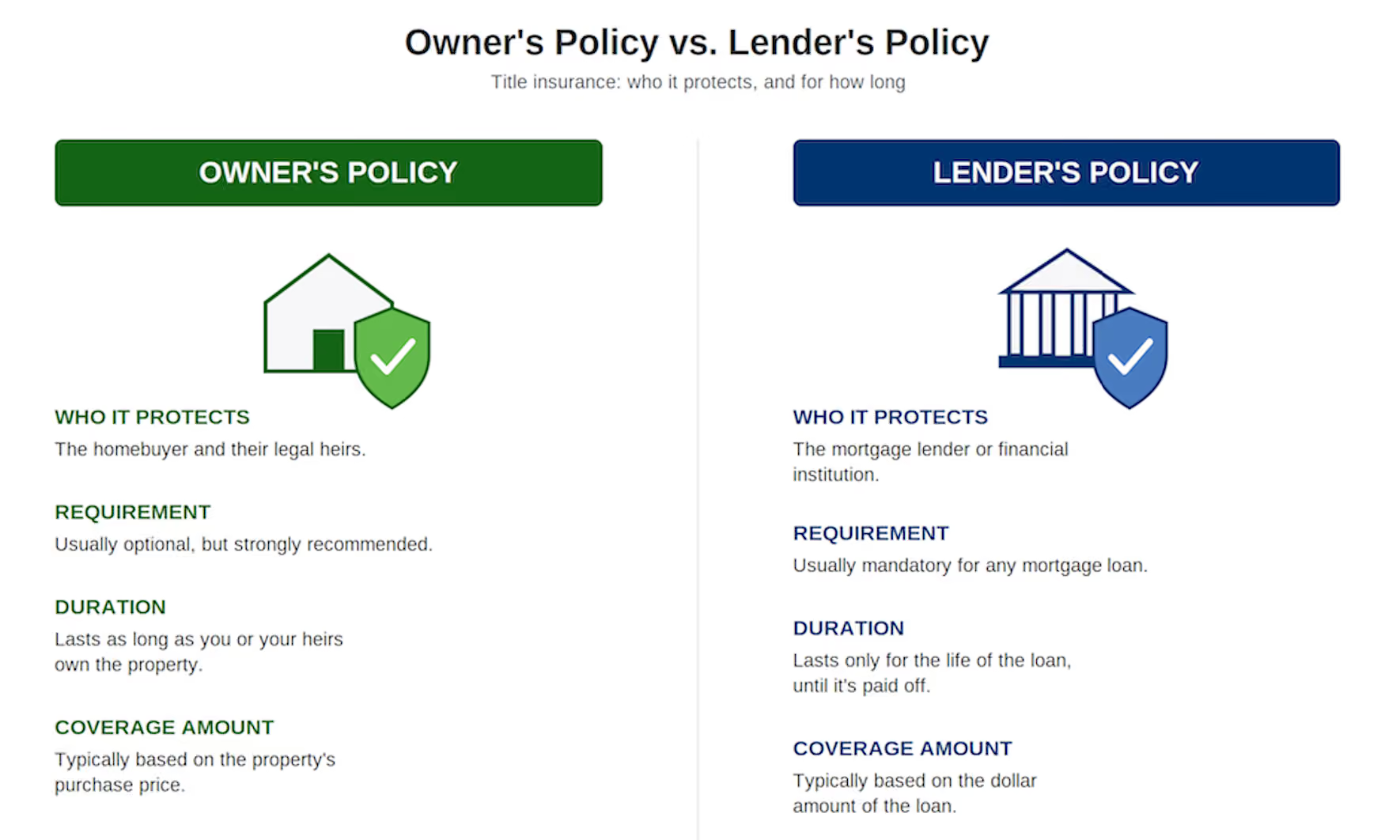
The lender's policy protects the bank or mortgage company financing the purchase. If you get a traditional bank loan, the lender almost always requires this as a condition of the loan. It only covers the lender's financial interest, not yours.
The owner's policy protects you, the buyer. It covers the full purchase price of the land. If a title problem surfaces after closing, this policy covers your legal costs and any financial losses up to the value of the property at the time of the claim.
If you are buying land through owner financing, there is no bank in the transaction. That means no lender is requiring a policy on your behalf. But the absence of a requirement is not the same as the absence of a need.
Felicia, co-founder of Compass Land USA, explains: "Owner-financed land closes without a bank in the middle, which is exactly why we always walk buyers through what title insurance is and does. Nobody is requiring it on their behalf. We make sure they understand what they're protected from."
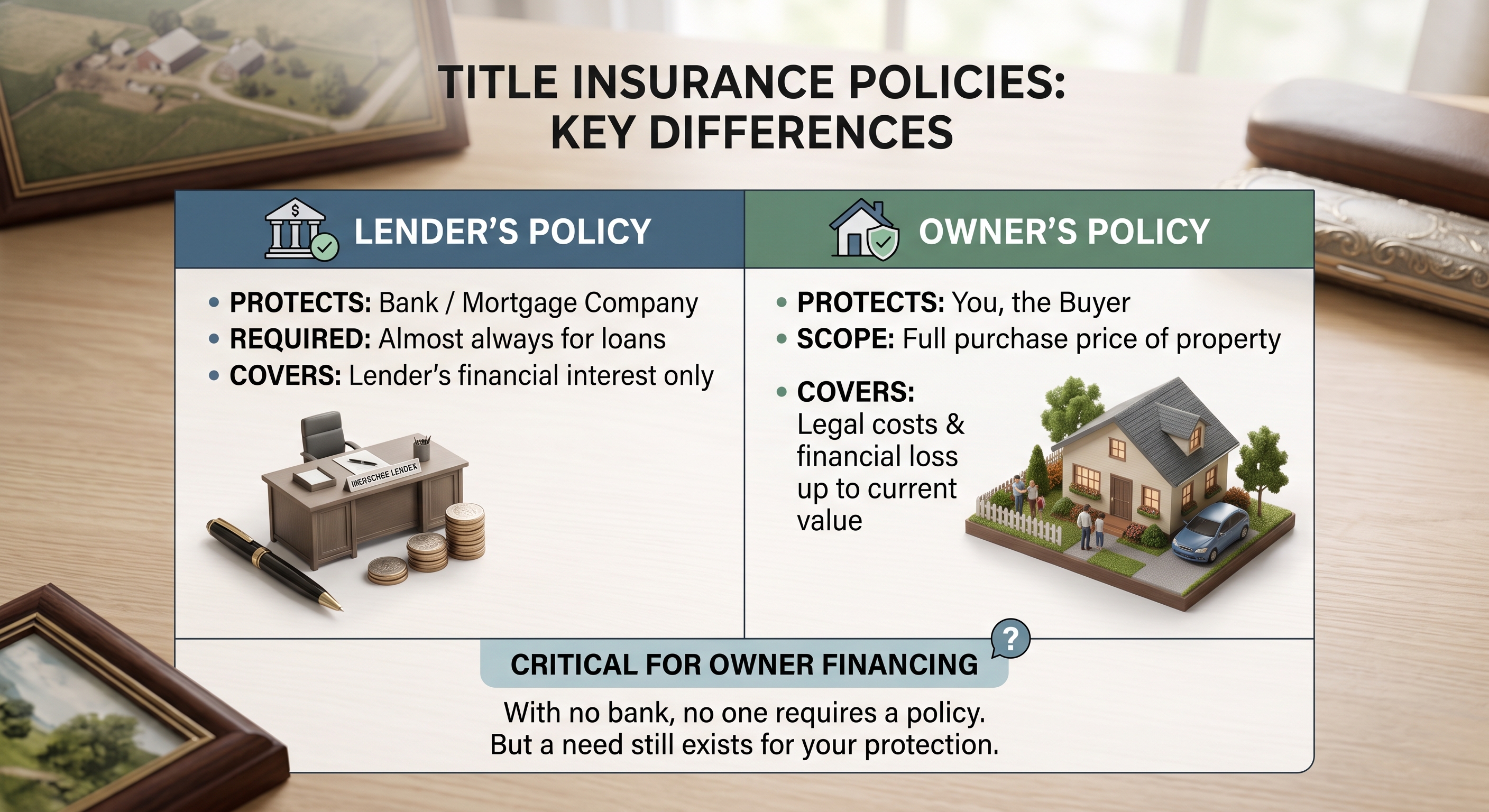
Owner's PolicyLender's PolicyWho it protectsThe buyerThe bank or lenderWho pays for itUsually the buyer (CLUSA covers this)Usually the buyerWhen it endsNever, as long as you own the propertyWhen the loan is paid offRequired?No legal requirementRequired by most lendersAmount of coverageFull purchase priceOutstanding loan balance
owner financing land explained → https://compasslandusa.com/post/how-to-buy-owner-financed-land
What Does Title Insurance Cover for Vacant Land?
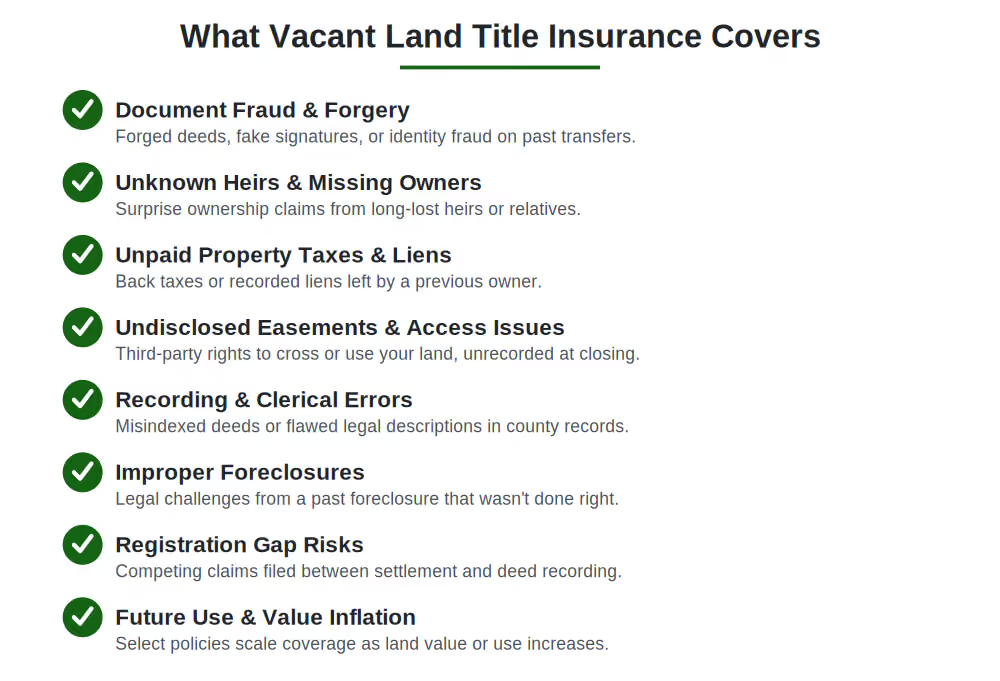
An owner's title insurance policy protects against a range of hidden problems. Here are the most common ones that come up on vacant lots and raw parcels.
Unpaid liens from a previous owner. If the seller owed money on the property, a contractor, lender, or taxing authority may have placed a lien against it. That lien travels with the land, not the person. Without insurance, you inherit it.
Recording errors. A clerk entering the wrong parcel number or legal description into county records can create a defective title. This happens more often than most buyers expect, and it is rarely obvious from a simple search.
Undisclosed heirs. If a prior owner died and not all heirs were accounted for, those heirs may have a legal claim to the land after you purchase it. This is especially common on rural parcels that have been in families for generations.
Forgery or fraud. A forged deed or forged signature in the chain of title can make your ownership claim invalid. ALTA data shows the average cost of a fraud-related title claim is $143,000, and these cases are increasing. Vacant land is a prime target because there is often no one living on the property to notice something is wrong.
Boundary and easement disputes. Easements and encroachments that do not appear in public records can affect how you use the land or where you can legally build.
Errors in the legal description. A mismatch between surveyed boundaries and what appears in the deed can be expensive to resolve without insurance.
According to Felicia, co-founder of Compass Land USA, "Title issues on raw land are different from a house. There's no inspection report that would flag a lien or a bad legal description. You're relying entirely on the title search. The insurance is the safety net if that search misses something."
15 questions to ask before buying land → https://compasslandusa.com/post/questions-ask-buying-land
How Much Does Title Insurance Cost for Vacant Land?
Land title insurance cost is almost always lower than for a home, because the property value is lower.
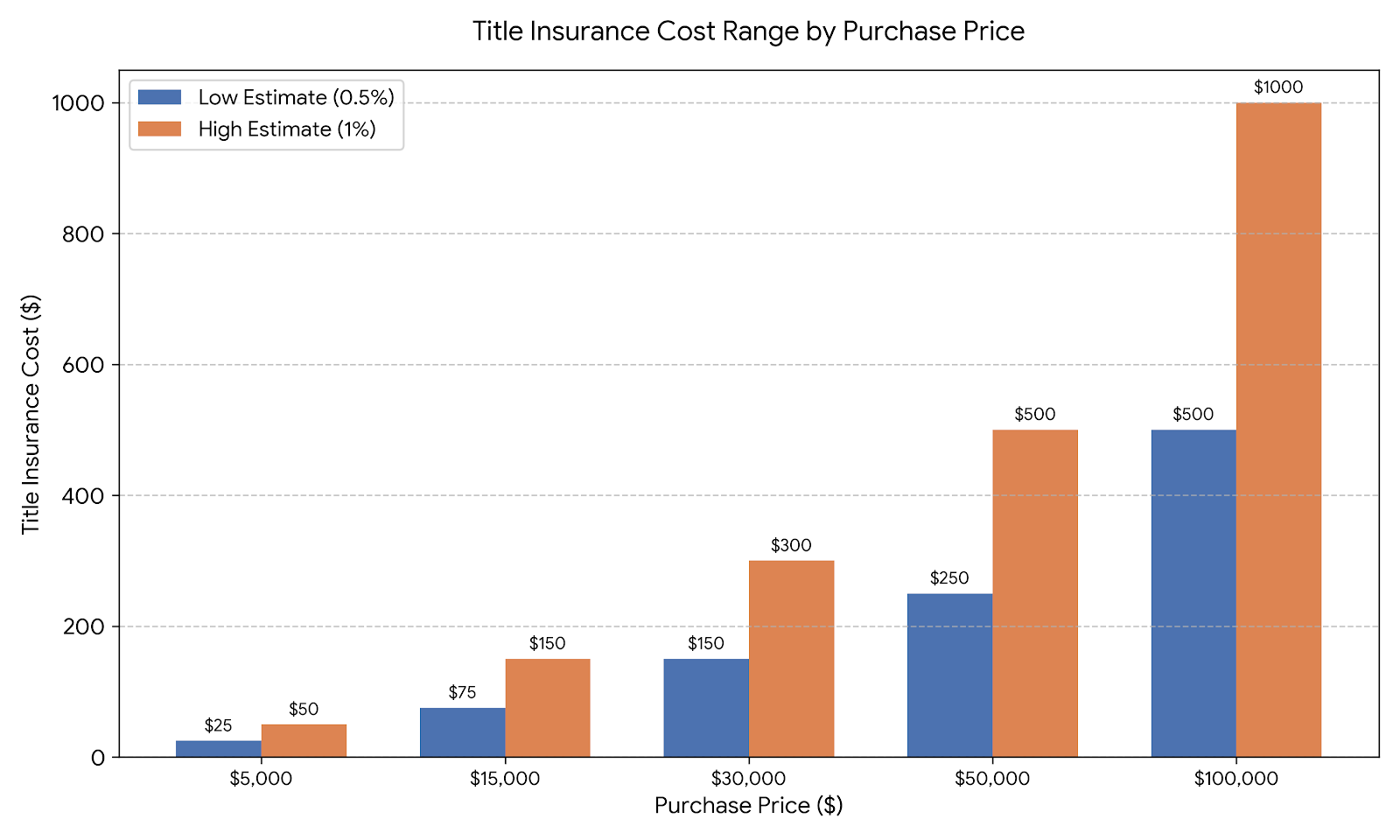
A standard owner's title insurance policy typically runs between 0.5% and 1% of the purchase price. The exact cost depends on the state (some states regulate rates, others do not) and the title company you work with. Some companies charge a flat fee for low-value parcels.
Estimated Title Insurance Costs for Vacant Land
Purchase PriceLow Estimate (0.5%)High Estimate (1%)$5,000$25$50$15,000$75$150$30,000$150$300$50,000$250$500$100,000$500$1,000
You pay once, at closing. No renewals, no annual premiums.
The cost of title insurance by state varies. In states with regulated rates like Texas and Florida, every title company charges the same premium for a given property value. In states with open markets, like Colorado and Arizona, you can shop around and prices may differ.
At Compass Land USA, we cover title insurance, escrow, and closing costs for all buyers. You receive full protection from day one at no extra cost.
check property access on vacant land → https://www.compasslandusa.com/how-to-check-property-access/]
Should You Get Title Insurance for Cheap Land?
This is one of the most common questions we hear. "The land is only $8,000. Is title insurance really worth it?"
Here is how to think about it.
The title insurance for a $10,000 parcel might cost $50 to $100. A boundary dispute, an unpaid lien, or a fraudulent deed on that same parcel could cost thousands of dollars in legal fees and potentially the entire property.
The 2025 NAR data is a real signal here. Fifty-two percent of title fraud cases target vacant land. That is not a coincidence. Vacant lots are easier targets because there is no homeowner living on the property, no utility company billing someone monthly, and fewer eyes on the ground.
Andrew puts it this way: "People ask whether they need title insurance on a $9,000 lot. I always say yes. The premium on a $9,000 lot might be $60. If something goes wrong and you're fighting in court without coverage, that $60 looks pretty small. We cover it for our buyers because we think it's the right thing to do."
For low-cost land, the question is not whether the protection is worth the premium. The premium is small enough that the math answers itself.
how to find out if land is in a flood zone → https://www.compasslandusa.com/how-to-check-for-flood-zones/]
browse available properties at Compass Land USA →https://compasslandusa.com/lands-for-sale
Is Title Insurance Required for Owner-Financed Land?
No. Title insurance is never legally required for owner-financed land.
When you buy with a bank loan, the lender mandates a lender's policy as a condition of financing. There is no bank in an owner-financed deal, so no one is requiring coverage.
But "not required" and "not needed" are two different things.
According to Felicia, co-founder of Compass Land USA, "When we sell owner-financed land, we close with a title company. They run the title search and issue the owner's policy. We pay for it on the buyer's behalf. That is part of doing the deal correctly."
At Compass Land USA, all of our sales close with the help of a local title company or real estate attorney. We cover title insurance for every buyer. You receive a clean deed with full documentation.
Not every land seller operates this way. If you are buying from a private seller or a company that does not use a title company, ask two direct questions: Will a title search be performed? Will an owner's title insurance policy be issued?
If they cannot confirm both, you can purchase your own owner's policy directly. Contact a local title company in the county where the property is located, provide the property details, and they will handle the rest.
5 types of property deeds and what they mean for land buyers → https://compasslandusa.com/post/types-of-deeds
.avif)
What Title Insurance Does Not Cover
Knowing the limits of coverage is just as important as knowing what it protects.
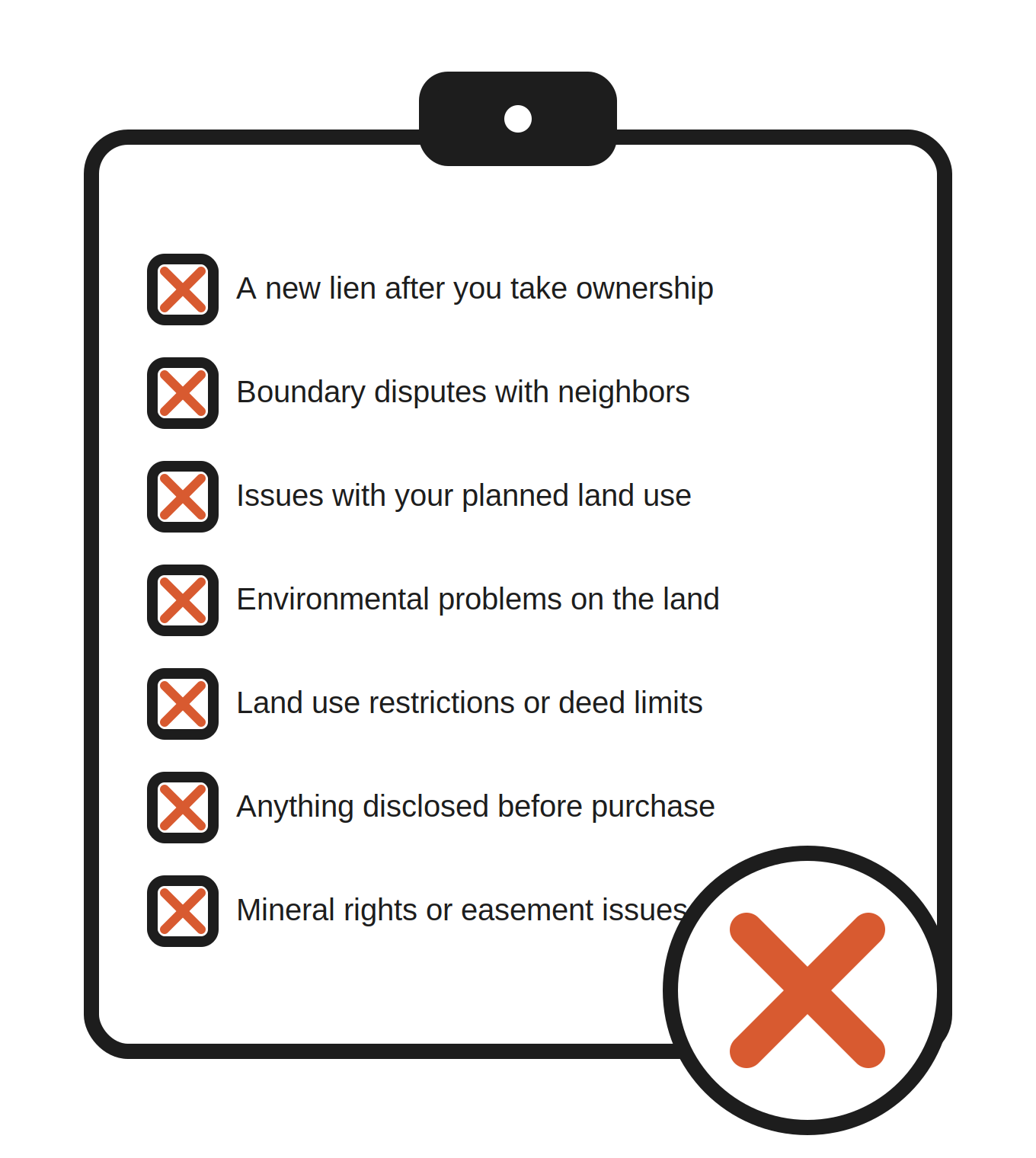
Title insurance does not cover problems that arise after your closing date. If you create a new lien, get into a boundary dispute with a neighbor after you take ownership, or face issues with how you plan to use the land, those fall outside title insurance.
It also does not cover environmental problems, land use restrictions, or anything that was disclosed to you before you purchased.
For vacant land specifically, ask your title company about available endorsements. A standard policy may not cover certain access easements or mineral rights issues on undeveloped parcels. In August 2025, ALTA released the ALTA 49 endorsement to address coverage gaps that previously existed for vacant lots. As of mid-2026, it is still rolling out state by state. Ask your title company whether it is available in your state.
how to check zoning before buying land → https://compasslandusa.com/post/check-property-zoning
How to Get Title Insurance for Vacant Land
The process is straightforward, especially if you work with a seller who already uses a title company.
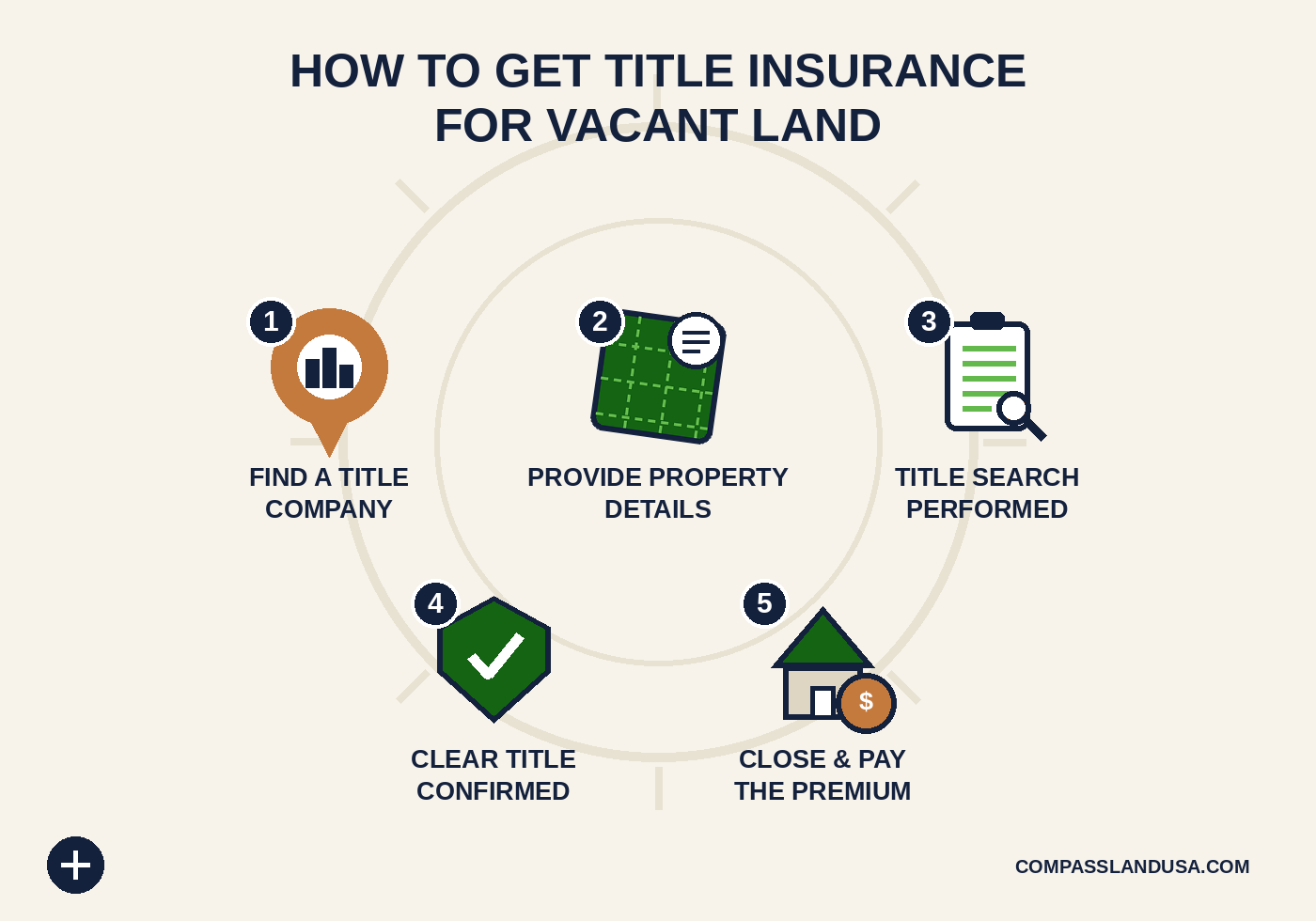
Step 1: Find a title company or real estate attorney licensed in the state where the property is located. Local is usually best. They know the county records and common issues in the area.
Step 2: Provide the property details, including the legal description, parcel number, and names of the buyer and seller.
Step 3: The title company performs a title search. This reviews public records for liens, judgments, ownership history, easements, and recorded documents going back as far as needed.
Step 4: If the title is clear, the company issues a commitment letter. This confirms they are prepared to insure.
Step 5: At closing, you pay the one-time premium. The policy is issued and coverage begins immediately.
Compass Land USA handles all of these steps for buyers on our properties. If you are purchasing land from a private seller, you can initiate this process on your own by contacting a local title company.
check utilities on vacant land before you buy → https://compasslandusa.com/post/check-property-utilities
Frequently Asked Questions About Title Insurance for Vacant Land
What is the difference between owner's title insurance and lender's title insurance?
A lender's policy protects the bank's financial interest. An owner's policy protects the buyer. If you purchase land without a bank loan, you need an owner's policy only. If you purchase with a bank loan, the lender will require its own policy, which does not protect you. Always confirm that an owner's policy is part of the transaction.
What is the ALTA 49 endorsement for vacant land?
The ALTA 49 endorsement, released in August 2025, addresses coverage gaps that previously existed in standard policies for undeveloped parcels, including certain access easements and encroachment issues. As of mid-2026, it is still rolling out state by state. Ask your title company whether it is available where your property is located and whether it applies to your situation.
You Do Not Have to Figure This Out Alone
Title insurance for vacant land is one of those protections that is easy to skip and easy to regret. The premium is low, the process is simple, and it closes off a real category of financial risk.
The fact that you are looking into this before you close puts you ahead of most buyers.
At Compass Land USA, we take care of title insurance, escrow, and closing costs for every property we sell. We work with local title companies and real estate attorneys so every buyer gets a clean deed and complete documentation.
If you have questions about title insurance or want to see what we currently have available, visit compasslandusa.com or call or text Andrew anytime at (313) 349-0434.
browse available land at Compass Land USA → https://compasslandusa.com/lands-for-sale
Andrew
Co-founder, Compass Land USA
Andrew co-founded Compass Land USA after buying and selling land for years without needing a single bank. He's been on both sides of hundreds of owner-financed deals across five states.
You've Read Enough. Time to Own Something.
Ready to Stop Renting Your Life and Start Owning Something?
Browse available land in Arizona, Colorado, Florida, Nevada, and North Carolina. Owner financing on every parcel. No bank. No credit check. Close in days.