

Protect Yourself
Before You Buy
How to Check for Utilities on Land for FREE
You found a piece of land you love. The price looks right and the location works. But before you get serious about buying, there is one due diligence step most buyers skip: checking for utilities.

How to Check for Utilities on Land for FREE
You found a piece of land you love. The price looks right and the location works. But before you get serious about buying, there is one due diligence step most buyers skip: checking for utilities.
Utilities can make or break a vacant land purchase. If you want to build a home, run a business, park an RV, or even just camp on your property, you need to know what is already there, and what it would cost to bring in what is not.
The good news: you can check utilities on land for free in a few hours. No expensive engineer, no paid service. Just a handful of online tools and a couple of phone calls.
Utility access for vacant land refers to whether a property has available connections to electricity, water, sewer, and other essential services. The majority of rural and remote vacant land parcels in the United States have no utilities in place. Bringing utilities to raw land can cost anywhere from $5,000 for a basic well to $34,500 or more for a full utility hookup, not including any permits or engineering. Checking utility status before you make an offer takes less than two hours and costs nothing.
This guide walks you through exactly how to check, who to call, and what to do when utilities are not available.

Why Utility Access Matters More Than Most Buyers Realize
Most buyers focus on price, location, and acreage. Utilities often get overlooked until after the purchase, and that is when the sticker shock hits.
Extending power to a remote parcel costs $5 to $25 per linear foot, with utility companies typically covering only the first 100 to 200 feet of new line. If your property sits half a mile from the nearest power pole, you are looking at $13,000 to $66,000 just for the electrical connection. [Source: HomeGuide, "Cost to Get Utilities on Land," 2026]
Water is not simpler. Drilling a private well runs $25 to $65 per foot depending on depth and geology. A complete residential well system averages $5,500 to $9,000 in most regions, but hard rock conditions in states like Colorado and Nevada can push that well past $15,000. [Source: Angi, "How Much Does Well Drilling Cost," 2026]
"We have sold over 800 properties since 2017, and the number one thing that changes a buyer's mind about a property is the utility situation. People fall in love with a parcel and then find out it would cost $30,000 to get power to it. That conversation goes better before the purchase than after." Andrew, Co-founder of Compass Land USA
Understanding what you are getting into before you buy protects your budget and your plans. It also gives you real negotiating leverage. If utilities are absent, that is a reason to negotiate the price down.
Before you dig into utilities, make sure you have already checked the basics on your property. Our guides on how to check who owns a property for free and how to check for property back taxes and tax liens for free cover those steps. Utilities come fifth in the due diligence sequence, after ownership, taxes, zoning, and access.
The Four Types of Utilities to Check on Vacant Land
When people say "utilities," they usually mean all of the following:
Electric: Grid power from a utility company or rural electric cooperative. Most rural land does not have this in place. Checking is simple and free.
Water: Either a municipal water line running to the property or a private well. If neither exists, you will need to drill a well. Costs vary widely by depth and location.
Sewer: Either a municipal sewer connection or a septic system. On most rural land, you are looking at septic. This requires a perc test before installation. [LINK: learn about perc tests → compasslandusa.com]
Natural Gas or Propane: Gas lines rarely reach rural land. Propane tanks are the common alternative. For most vacant land buyers, gas is not a primary concern.
For any buildable rural parcel, focus on electric, water, and septic. Those are the three that determine whether you can actually live on the land.
How to Check If Land Has Electric Power
This is the easiest utility to check. Here is the process:
Step 1: Open Google Maps and locate your property.Zoom out enough to see the surrounding area, especially roads and any nearby structures. Look for power lines along roads near the property. Zooming into Street View often shows utility poles along the roadside.
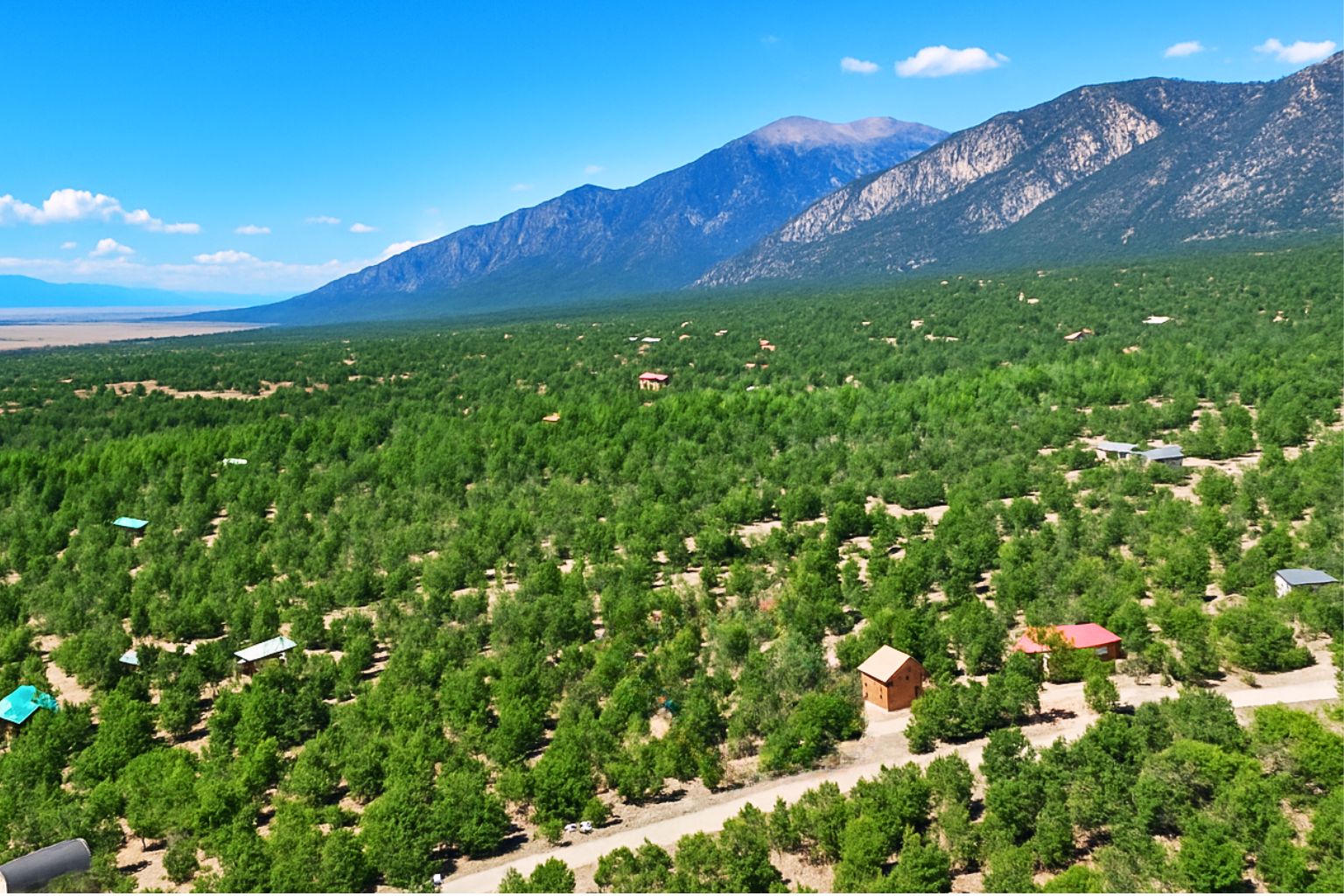
Step 2: Search for the county's electric utility company.In Google, type the county name followed by "electric company" or "rural electric cooperative." Most rural areas are served by a rural electric cooperative (REC) rather than a large utility company. In our example, a parcel in Costilla County, Colorado, a search for "Costilla County power" brings up San Luis Valley Rural Electric Cooperative as the service provider.
Step 3: Call the utility company directly.Ask two specific questions:
- Do you provide service to this parcel? (Give them the parcel number and address if available)
- Is there existing electric service at or near the property?
Leave a voicemail if needed. Most utility companies return calls within a business day or two. If they confirm they do not serve your area, ask them which company does.
What to make note of before you call:
- The county the property is in
- The parcel number (found on the listing or by calling the county assessor)
- The nearest road name and any nearby cross streets
"I always tell buyers: write down the parcel number before you start making calls. Without it, you will spend 20 minutes on hold while the utility rep tries to locate your property. With it, they can usually answer your question in under five minutes." Andrew, Co-founder of Compass Land USA
According to Andrew, who manages acquisitions across Arizona, Colorado, Florida, Nevada, and New Mexico, electric power is least common on large rural parcels more than a mile from a town or highway, and most common on residential lots within a few miles of a city or subdivision.
PRO TIP
Write down the parcel number before you start making calls. Without it, you will spend 20 minutes on hold while the utility rep tries to locate your property. With it, they can usually answer your question in under five minutes. Find the parcel number on the listing, or call the county assessor's office. It is free public information.
How to Check If Land Has Municipal Water or Water Lines
For rural vacant land, running municipal water to your property is rarely an option. Most rural parcels are served by wells or not at all.
But it is worth checking, especially on smaller lots closer to towns or in subdivisions.
How to check for municipal water:Call the county's Planning and Zoning Department or the Public Works Department. Ask them whether municipal water lines run near your parcel, and if so, whether your property could tap into them.
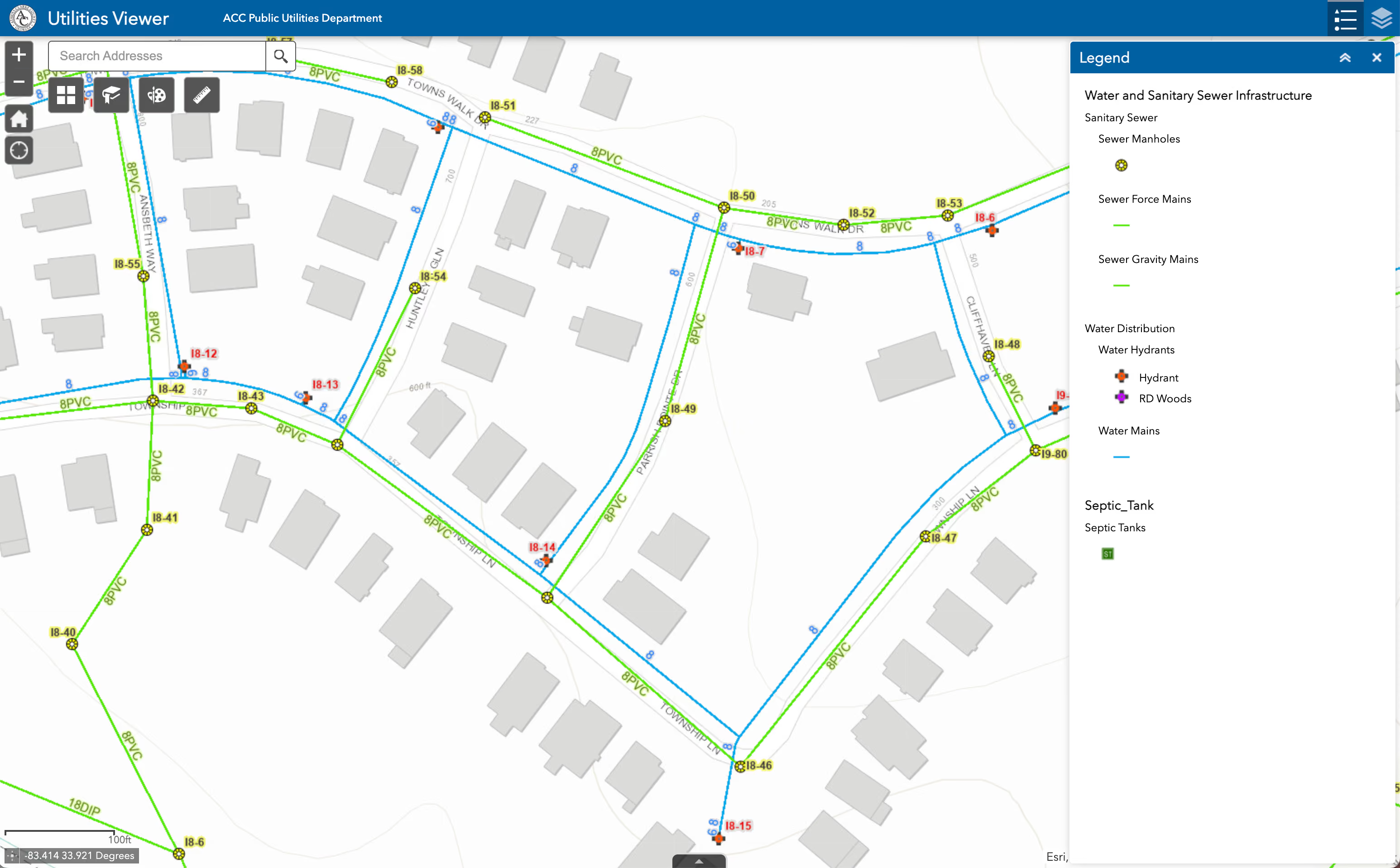
You can also check the county's GIS portal online. Many counties display water and sewer line locations as a map layer. Look for the GIS option in your county's official website and search for your parcel.
What most rural land buyers will find:No municipal water. That means you would need to drill a private well. Before purchasing, find out whether the county allows wells on parcels of your land's size, and what the permitting process looks like.
According to the USDA, approximately 43 million Americans rely on private wells as their primary water source. For rural land buyers, wells are often the expected and practical solution, not a red flag.
A note on water rights:In western states like Colorado, Nevada, and Arizona, water rights are separate from land ownership. A property can have the surface rights but no legal right to pump groundwater. Always confirm that water rights are included in the deed before purchasing.
learn more about checking property access and county resources → /check-property-access-coordinates/
How to Check Sewer and Septic Options
Sewer is the third utility to check. Like water, municipal sewer connection is unusual for remote or rural land.
How to check for municipal sewer:Call the county's Planning and Zoning Department or Building and Development Department. Ask whether sewer lines run near the property and whether your parcel could connect. The county staff will route you to the right contact, usually a county engineer.
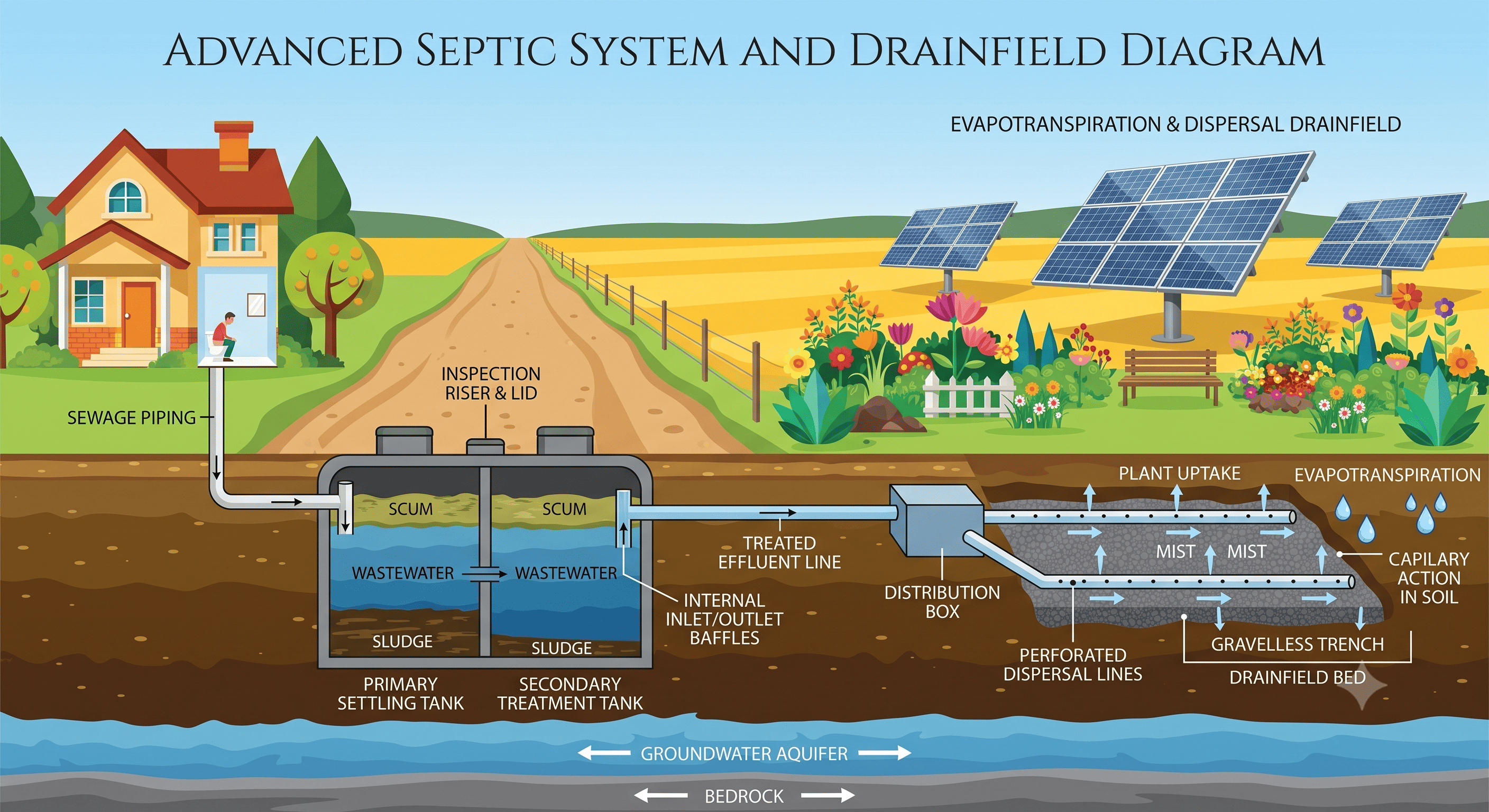
If no sewer is available:Most rural landowners install a septic system. Before you can install septic, the land has to pass a percolation test (perc test), which measures how well the soil absorbs water. Not all land passes a perc test. Failing a perc test means you may not be able to build a traditional structure on the property.
Ask the county engineer:
- What are the minimum requirements for a septic permit?
- Does this parcel's soil type typically support a septic system?
- What is the permit process and approximate cost?
While you have the county engineer on the phone:Ask about well permits too. The same office often handles both. Getting this information in a single call saves time.
"The two calls that matter most for utilities are the electric co-op and the county engineer. Those two conversations tell you 90% of what you need to know about whether you can build on a property and what it would cost." Felicia, Co-founder of Compass Land USA
What Happens When Utilities Are Not Available
Most rural vacant land does not have utilities in place. That is normal. It does not automatically make a property a bad buy. It does mean you need to plan for the cost of bringing utilities in, or go off-grid.
Your options when utilities are absent:
Option 1: Extend grid power from the road.This works if power lines run along the road near your property. Cost ranges from $5 to $25 per linear foot for the new line, plus the cost of utility poles ($1,200 to $5,600 each). The utility company often covers the first 100 to 200 feet. Everything beyond that is your cost.
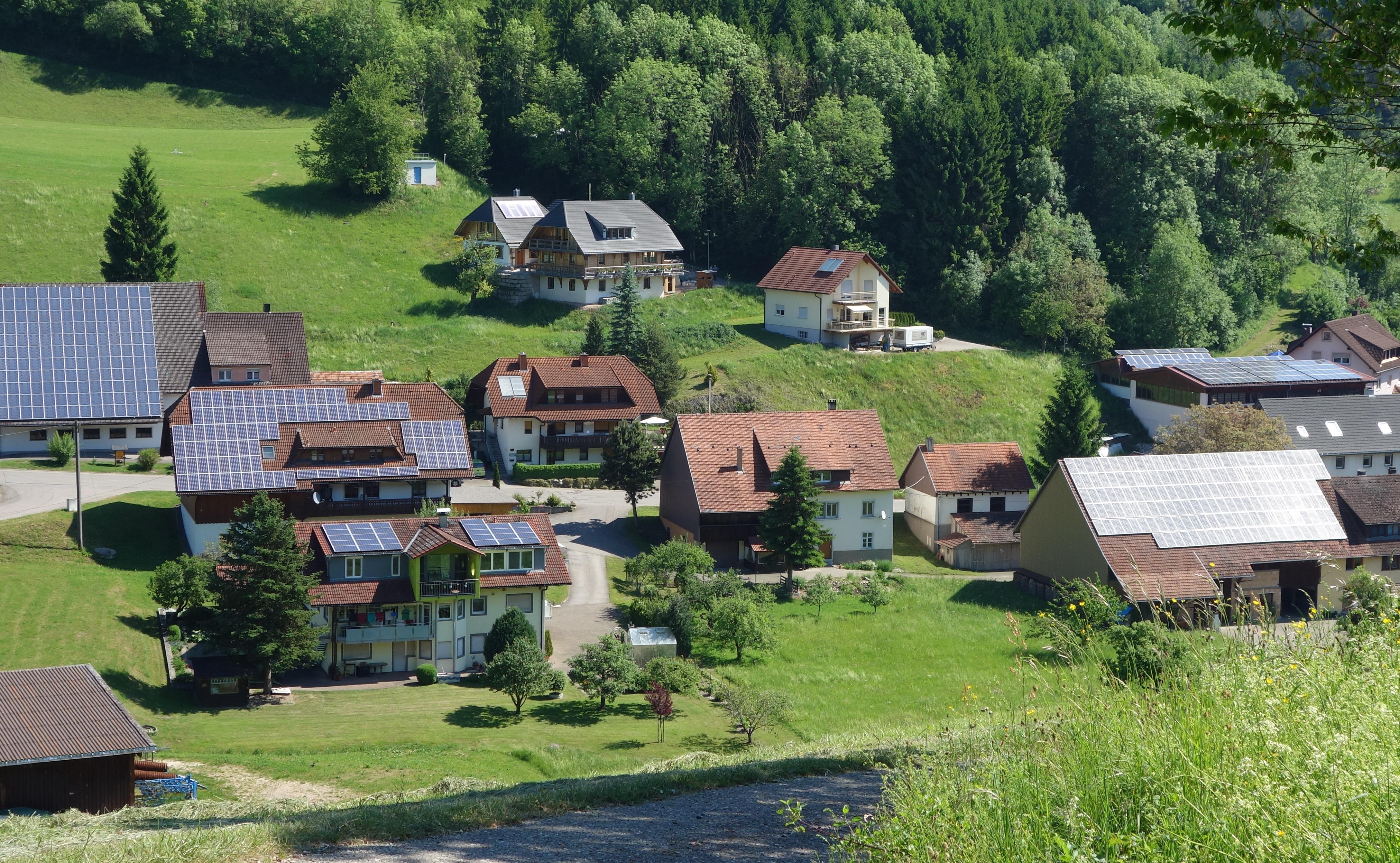
Option 2: Go solar off-grid.Solar panels, a battery bank, and a generator can power a home without a grid connection. Modern solar systems have dropped significantly in price, and for remote parcels, solar is often cheaper than extending the grid. This is a popular choice for buyers interested in off-grid and alternative living on their land.
Option 3: Drill a well.If municipal water is not available, a well is the standard solution on rural land. Full well installation averages $5,500 to $9,000 but can run higher in rocky terrain. [Source: Angi, 2026]
Option 4: Install a septic system.Once your land passes a perc test, a septic system can be installed. County requirements vary, but this is standard for rural residential development.
The key question to ask:Before you purchase, estimate the total cost to bring the utilities you need to the property. Then factor that number into your offer. If utilities would cost $40,000 on a $30,000 parcel, the property needs to be priced accordingly.
Our guide on buying land for a mobile or manufactured home includes a breakdown of typical development costs that is worth reading alongside this one.
The Full Utility Check: A Quick Reference
Using this table as your checklist, a complete utility check takes two to three hours from start to finish. Most of which is waiting for callbacks.
| Utility | Who to Call | Free Online Resource |
|---|---|---|
| Electric | County electric co-op or utility company | Google Maps Street View for poles; search "[county] electric cooperative" |
| Municipal Water | County Planning/Zoning or Public Works | County GIS portal (search "[county name] GIS map") |
| Municipal Sewer | County Planning/Zoning or Building Dept | County GIS portal |
| Well Permitting | County Engineer or Health Department | County website, search "well permit [county name]" |
| Septic Permitting | County Engineer or Building Dept | County website, search "septic permit [county name]" |
Frequently Asked Questions About Checking Utilities on Land
How do I check what utilities are available on a piece of land for free?
Start with a Google Maps search to look for power lines along roads near the property. Then call the county's electric cooperative or utility company to confirm whether they serve your parcel. For water and sewer, call the county Planning and Zoning or Public Works department. Use the county's GIS portal online to check whether water or sewer lines are mapped near the property. All of these resources are free.
What utilities should I verify before buying vacant land?
Check electric power, water (municipal line or well feasibility), and sewer (municipal or septic feasibility). In western states like Colorado, Arizona, and Nevada, also confirm that water rights are included in the deed. These four items cover the most important utility questions for any buildable rural parcel.
How do I find out if utilities can be extended to remote property?
Call the electric cooperative or utility company that serves the county and ask whether your parcel falls within their service territory. They can tell you whether extending power to your property is feasible and give you a rough cost estimate. For water, call the county engineer and ask about well permitting. For septic, ask about perc test requirements for your specific parcel.
What if the seller does not have the parcel number?
A missing parcel number is a serious red flag. Parcel numbers are public record. Any legitimate seller can retrieve this number from the county assessor's office in minutes. If a seller cannot or will not provide it, that is a warning sign worth paying attention to. Our guide on how to check who owns a property for free explains how to look up ownership and parcel data yourself using free county tools.
How much does it cost to bring utilities to vacant land?
Costs vary widely. Extending grid power typically runs $5 to $25 per linear foot. Drilling a well averages $5,500 to $9,000 for a complete system. Septic installation costs vary by county and soil conditions. A realistic budget for full utility hookup on a remote parcel is often $20,000 to $50,000, depending on distance from existing infrastructure. Always get estimates before purchasing. [Source: HomeGuide, Angi, 2026]
Can I buy land without utilities and still use it?
Yes. Many buyers purchase off-grid parcels for camping, hunting, RV use, or future development. Whether land without utilities works for your plans depends on what you want to do with it. If you need to build a permitted structure, you will eventually need electric, water, and septic, or approved alternatives. If you plan to use the land recreationally, utilities may not matter at all.
Is it a red flag if land has no utilities?
Not on its own. The majority of rural vacant land in the United States does not have utilities in place. What matters is whether the land can support utilities if you need them, whether it is in an electric co-op's service territory, whether the soil passes a perc test, whether the county will permit a well. No utilities is a data point. No pathway to utilities is a problem.
You Can Do This Yourself
Checking utilities on land is not complicated. It takes a few online searches, two or three phone calls, and a little patience waiting for callbacks.
The process we just walked through, Google Maps, the electric co-op, and the county engineer, handles 90% of what you need to know before you buy.
The fact that you are doing this research puts you ahead of most buyers. Most people skip this step entirely and find out the hard way after closing.
If you want to walk through the rest of your due diligence checklist, our guide on 15 questions to ask before buying land covers every step of the process from start to finish.
And if you are ready to look at properties, we have rural land available across Arizona, Colorado, Florida, and Nevada. All with clear title and owner financing available with no bank required. Browse our current listings at compasslandusa.com or call or text Andrew anytime at (313) 349-0434.
Andrew
Co-founder, Compass Land USA
Andrew co-founded Compass Land USA after buying and selling land for years without needing a single bank. He's been on both sides of hundreds of owner-financed deals across five states.
You've Read Enough. Time to Own Something.
Ready to Stop Renting Your Life and Start Owning Something?
Browse available land in Arizona, Colorado, Florida, Nevada, and North Carolina. Owner financing on every parcel. No bank. No credit check. Close in days.