
Protect Yourself
Protect Yourself
5 Types of Property Deeds in a Land Purchase
Five deed types show up in almost every land sale, and they don't offer the same protection. Here's the difference between a Warranty Deed, Special Warranty Deed, Quitclaim Deed, Bargain and Sale Deed, and Grant Deed, plus what to check before you sign.

5 Types of Property Deeds in a Land Purchase
A property deed transfers land ownership from seller to buyer. Land buyers run into five main types: Warranty Deed, Special Warranty Deed, Quitclaim Deed, Bargain and Sale Deed, and Grant Deed. Each one gives you a different level of protection against past title problems, liens, and ownership disputes, and the difference matters more than most buyers realize.
What a Property Deed Actually Does
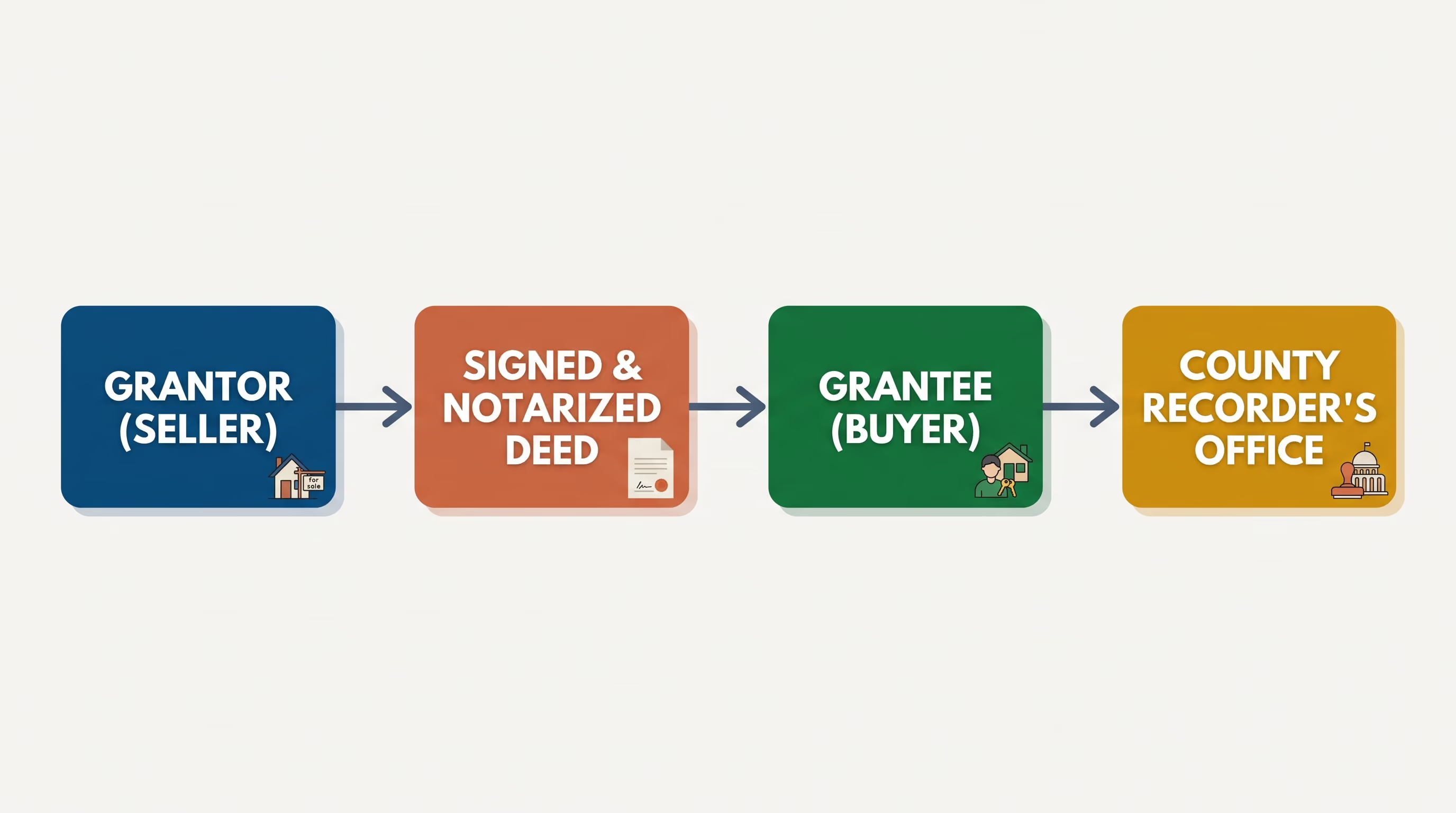
A deed is the legal document that moves ownership of a property from the grantor (seller) to the grantee (buyer). It's not a formality. Under the Statute of Frauds, a legal rule that traces back centuries and is still active law in every US state, any contract for the sale of real property has to be in writing and signed by the parties involved (Cornell Law School Legal Information Institute, checked September 2026). A handshake deal on land doesn't hold up. The deed does.
The deed has to name the grantor and grantee, describe the property, and state that the grantor has the legal right to transfer it. Once everyone signs and the deed is notarized, it gets recorded with the county, usually the recorder's office, clerk's office, or register of deeds depending on the state. Recording isn't what makes the transfer legal. Signing does that. But an unrecorded deed is hard to prove later, and it can create real problems if a lien or a second buyer shows up before you file.
Deed vs. Title: The Difference That Trips People Up
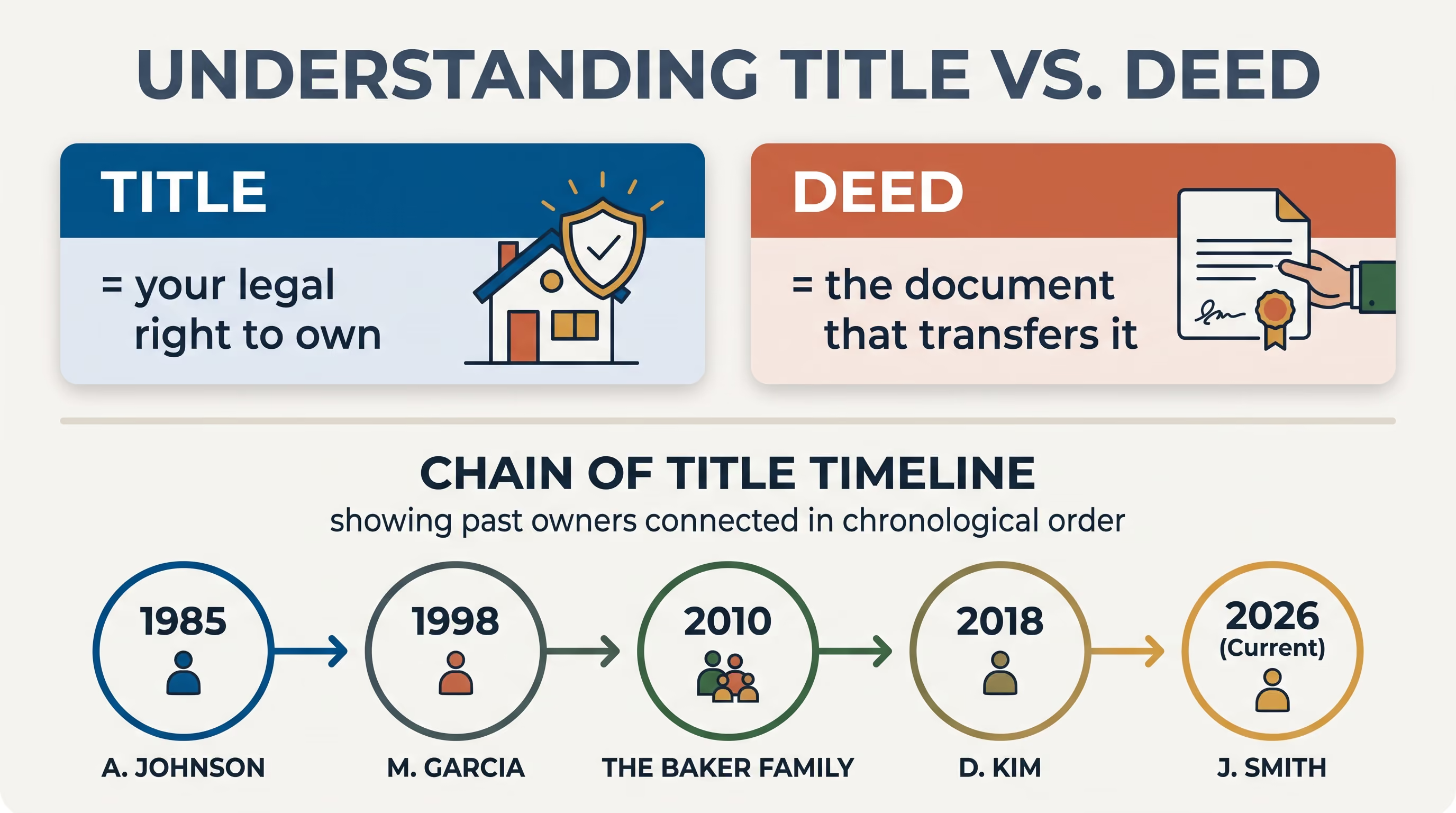
Title is the legal right to own a property. Deed is the physical document that transfers that right. You need both to matter, and they're easy to mix up because they move together in almost every transaction.
When someone talks about a "chain of title," they mean the full list of every past owner of a parcel, going back as far as records allow, ideally 30 to 40 years for rural land. A clean chain of title has no gaps and no unresolved claims. Before you buy any parcel, especially vacant land in a rural county where records can be thinner, that chain needs to be checked.
You can pull a property's chain of title yourself using the county assessor's parcel number (APN), but most buyers hire a title company to run a full title search instead. The search is where a lot of surprises turn up, old liens, unpaid back taxes, a missing signature from 1987. According to the American Land Title Association, roughly 25% of residential real estate transactions turn up some kind of title issue during the search process (ALTA, industry data reported 2026). The National Association of Realtors has reported a similar pattern from title companies, with about 36% of transactions involving a title complication significant enough to require resolution before closing (NAR, 2026). Most of these get fixed before closing. A missed one is what a deed and a title search are both trying to catch.
If you want the step-by-step on checking for old debts before you buy, our guide to checking a property's back taxes and liens walks through it county by county.
The 5 Types of Property Deeds, Compared
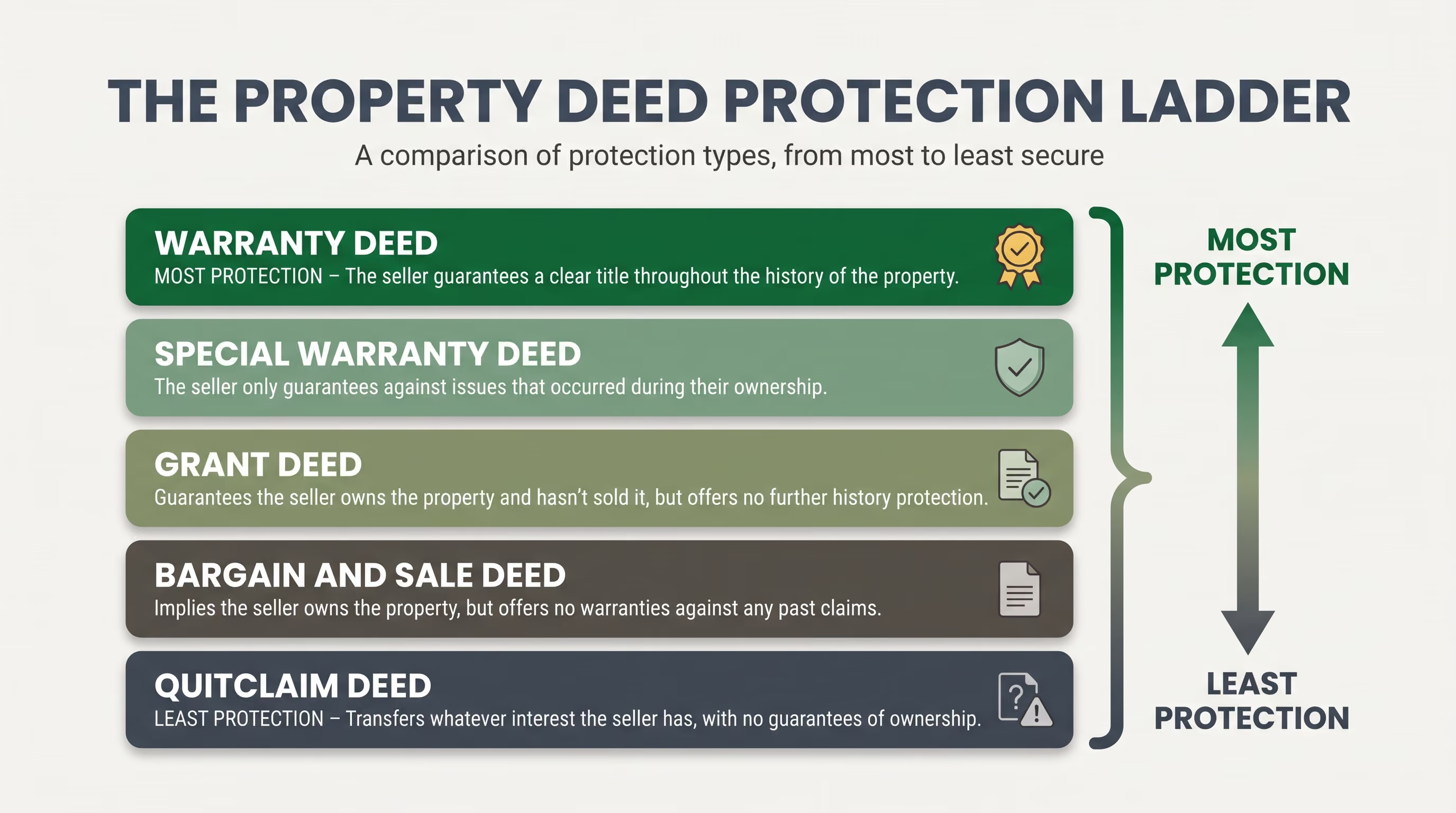
There are five deed types you'll run into buying land in the US. They range from full protection to almost none, and the right one depends entirely on the situation.
Warranty Deed
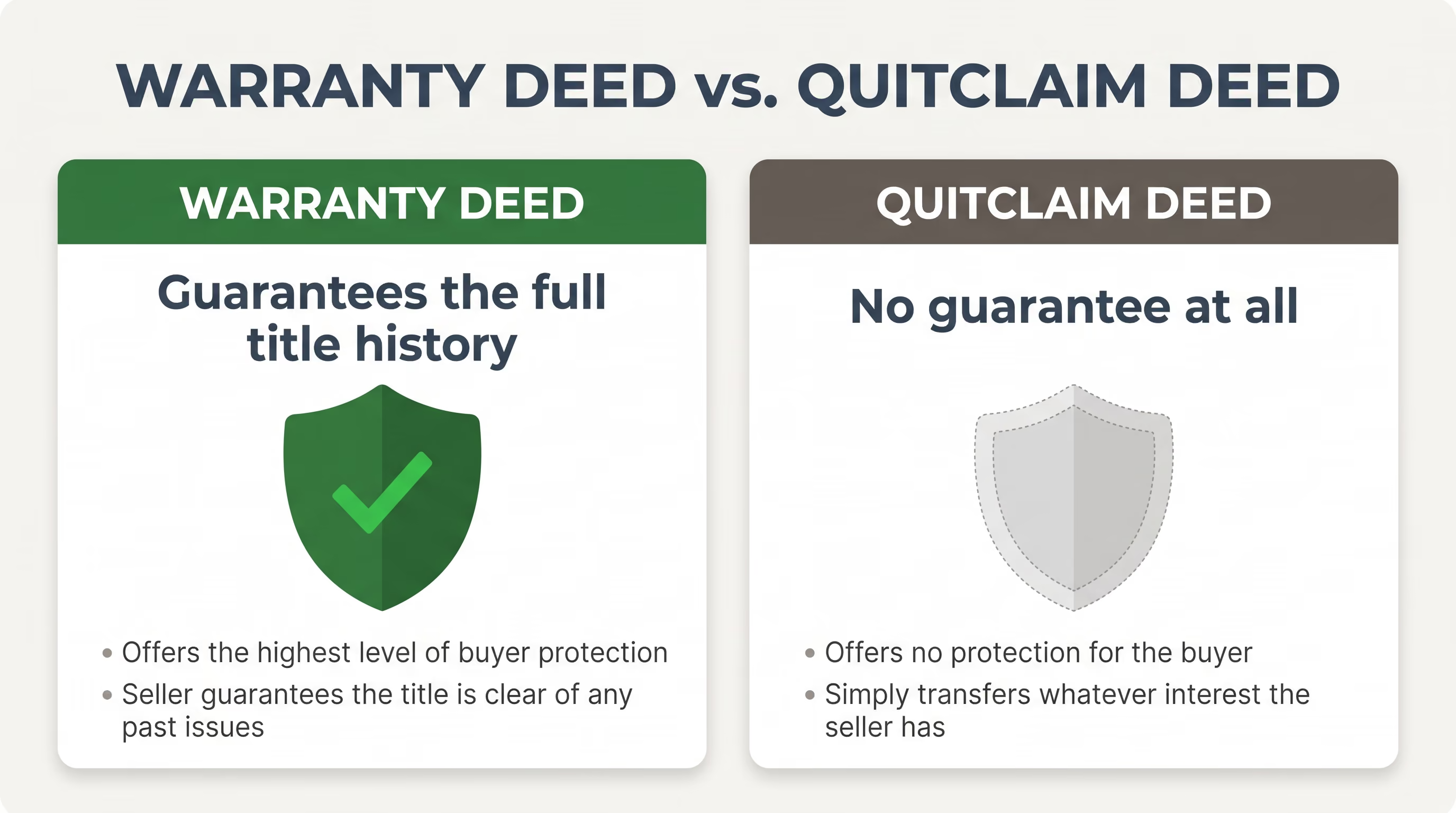
A Warranty Deed is the strongest protection a buyer can get. The seller is guaranteeing that the title is clean for the property's entire history, not just their own ownership, and that there are no liens or debts against it. If a problem from decades ago surfaces later, the seller who signed a Warranty Deed is on the hook to fix it or compensate the buyer.
This is the deed you want in a standard arm's-length sale between two people who don't know each other. If a seller resists using one, ask why. It's a fair question, and a seller with nothing to hide usually doesn't mind answering it.
Special Warranty Deed
A Special Warranty Deed looks similar but covers less ground. The seller only guarantees the title against problems that happened during their own ownership, not before it and not after. If a title defect traces back to an owner three sales ago, a Special Warranty Deed doesn't protect you from it.
This type shows up often in commercial deals, foreclosure sales, and some land transactions where the current owner can't vouch for what happened before they bought.
Quitclaim Deed
A Quitclaim Deed, sometimes called a Non-Warranty Deed, offers no guarantee at all. The grantor is transferring whatever interest they have, if any, with zero promises about liens, clear title, or even whether they own the property free and clear.
Quitclaim Deeds are common between people who already know and trust each other: family members, divorcing spouses, or someone correcting a mistake on an earlier deed, like a misspelled name or a document that never got recorded. They're a poor choice between strangers, since a buyer has no recourse if the title turns out to be a mess.
Bargain and Sale Deed
A Bargain and Sale Deed transfers a property with no guarantee about the state of the title. It implies the grantor holds title but doesn't promise the property is free of liens, debts, or other claims.
You'll see this type used in tax sales, foreclosure sales, and some estate transfers, situations where the entity transferring the property (a county, a bank, an estate) isn't in a position to guarantee a clean history.
Grant Deed
A Grant Deed sits in the middle. The grantor guarantees they haven't already sold the property to someone else and that it's not encumbered in ways they haven't disclosed, but they don't guarantee a fully clear chain of title going back through every past owner. It's common in several states, including California, as the standard deed for an everyday sale between people who don't know each other.
Deed Comparison Table
What a Property Deed Has to Include
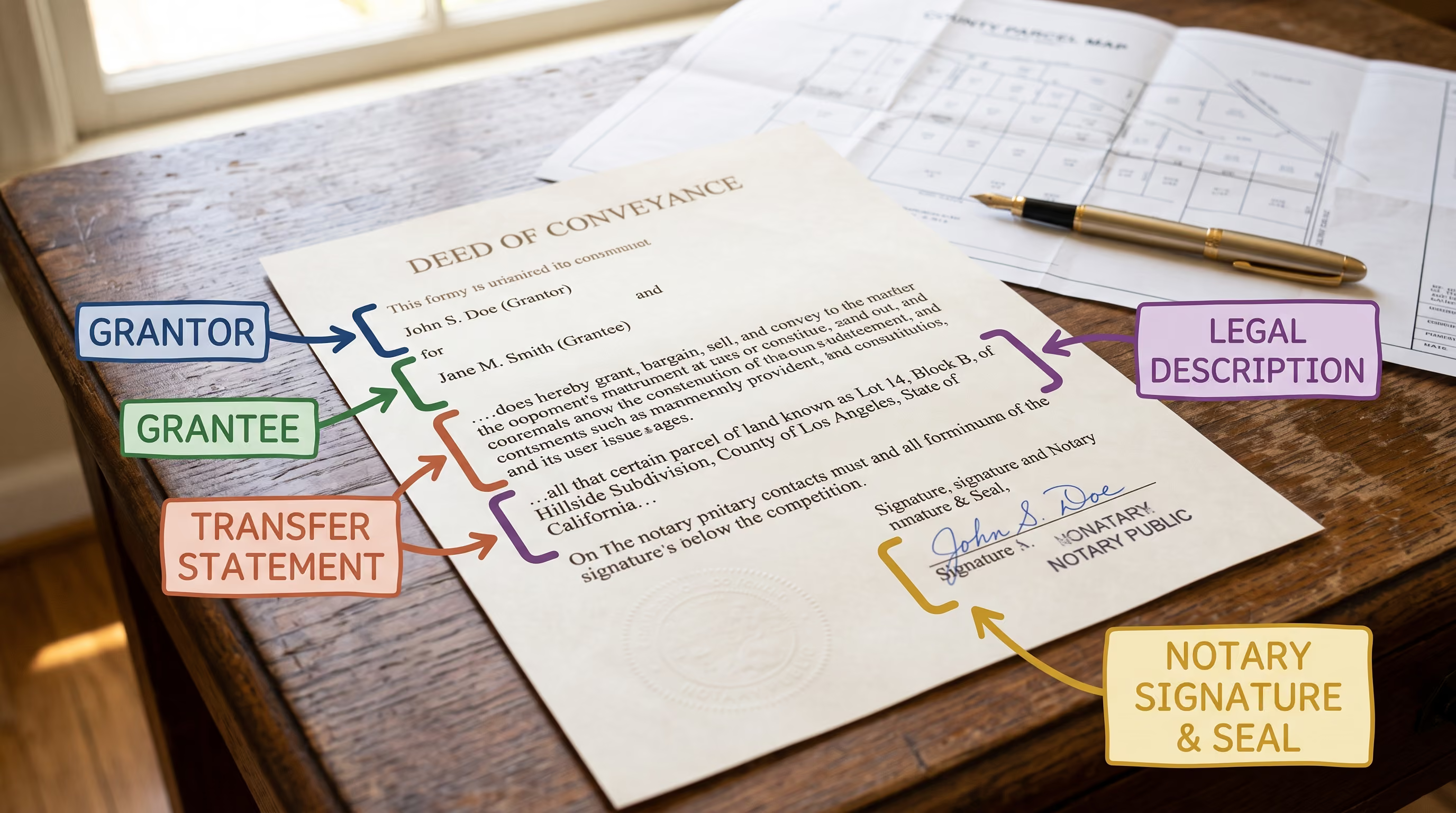
Every deed, no matter the type, needs a few core pieces to be valid:
- The full legal name of the grantor (seller) and grantee (buyer)
- The legal description of the property, not just a street address, county records use metes and bounds or a lot and block description
- A statement that the grantor has the legal right to transfer the property
- The grantor's signature, notarized
A Warranty Deed or Special Warranty Deed will also include specific language about the property being free of liens and undisclosed claims. A Quitclaim Deed won't, because that guarantee is exactly what it skips.
Before you buy any parcel, run through the full picture: check the zoning, confirm legal access, and check for any deed restrictions or HOA rules that could limit what you can build. A deed only transfers what's there. It doesn't tell you what you can do with it.
How a Deed Gets Recorded, and Why That Step Matters
After the deed is signed and notarized, it gets filed with the county where the property sits, at the recorder's office, clerk's office, or register of deeds, depending on the state. The US has 3,069 counties, and most maintain their own separate land records office (National Association of Counties, 2026), which is why deed recording rules and fees vary so much from one county to the next.
Recording isn't what makes a sale legal. The signed and notarized deed does that. But an unrecorded deed is hard to prove if a dispute comes up later, and it leaves the door open for someone to record a competing claim first. Skipping this step is one of the more common and avoidable mistakes in a land purchase.
Timelines vary by county, but real buyers have reported getting their deed fast. One Compass Land USA buyer wrote, "In less than 10 days I got the deed, stress-free purchase like buying an appliance." Another, Amy Stahler, a Florida land buyer, said, "I have received the deed, everything has been wonderful." A third buyer, Isabel, put it this way: "I kept quiet about it to my family until I received the deed. I'm so thankful you didn't rip me off." (Source: Compass Land USA buyer reviews, Testimonials.md.)
If you're financing rather than paying cash, our guide on how to buy owner-financed land and the companion piece on buying owner-financed land through a title company cover how the deed and the closing paperwork fit together. Owner financing through Compass Land USA means no bank and no credit check, and you still get a deed recorded in your name.
A deed transfers ownership. It doesn't insure it. If you want a deeper look at how title insurance backs up what the deed already promises, our title insurance guide for vacant land covers what it costs and when it's worth carrying. And if the parcel includes any mineral rights questions, our guide to how mineral rights work is worth reading before you sign anything.
Browse current land for sale across Arizona, Colorado, Florida, Nevada, and North Carolina, all listed with full disclosure on access, utilities, and zoning before you ever get on a call.
FAQ: Property Deeds and Land Purchases
What are the 5 types of property deeds used in a land purchase?
The five main types are the Warranty Deed, Special Warranty Deed, Quitclaim Deed, Bargain and Sale Deed, and Grant Deed. They range from full protection against past title problems (Warranty Deed) to none at all (Quitclaim Deed), and which one you should expect depends on who you're buying from and why.
What's the difference between a warranty deed and a quitclaim deed?
A Warranty Deed guarantees the property's title is clean for its entire history and holds the seller responsible if that turns out to be false. A Quitclaim Deed makes no such guarantee. It transfers whatever interest the grantor has, with no promise the title is clear.
Which deed type gives a land buyer the most protection?
A Warranty Deed. It's the only one of the five that holds the seller accountable for title problems from any point in the property's history, not just their own ownership period.
Do I need a lawyer to prepare a property deed?
It's not always required by law, but it's recommended, especially for a first land purchase. A real estate attorney or a title company can make sure the legal description, signatures, and notarization are all correct, since a mistake on a deed can be expensive to fix later.
What happens if a deed is never recorded with the county?
The transfer is still legally valid between the two parties once it's signed and notarized. The risk is proving it later. An unrecorded deed makes it harder to establish ownership if a dispute or a competing claim comes up, so recording it with the county right after signing is the safer move.
Can a quitclaim deed be used to buy land from someone I don't know?
It can, but it's risky. A Quitclaim Deed gives you no protection if the title has liens, debts, or ownership gaps you didn't know about. It works well between family members or to fix an error on an existing deed. Between strangers, a Warranty Deed or title insurance, or both, is the safer path.
Does a deed replace the need for title insurance?
No. A deed transfers ownership and, depending on the type, may include the seller's promise about the title's history. Title insurance protects you financially if that promise turns out to be wrong, or if a title problem the search missed shows up later. They do different jobs.
How long does it take to receive a deed after buying land?
It depends on the county's recording process, but it's often faster than people expect. Real Compass Land USA buyers have reported receiving their recorded deed in under two weeks after closing. No company can promise an exact timeline, since county offices move at their own pace, but it's rarely the months-long wait some first-time buyers fear.
Bottom Line
Five deed types cover almost every land purchase in the US: Warranty Deed, Special Warranty Deed, Quitclaim Deed, Bargain and Sale Deed, and Grant Deed. A Warranty Deed protects you the most, guaranteeing clean title for the property's whole history, not just the current seller's ownership. A Quitclaim Deed protects you the least, and it belongs in family transfers and paperwork corrections, not sales between strangers.
Check the chain of title before you buy, confirm which deed type you're getting, and make sure it gets recorded with the county once it's signed. None of this should feel intimidating. It's a short list of facts to confirm, and a title company or real estate attorney can walk you through it for the cost of a closing fee.
This article is for general information and isn't legal advice. For a specific title question or a deed you're about to sign, talk to a title company or a real estate attorney licensed in that state.
Questions about a Compass Land USA property? Call or text Andrew anytime at (313) 349-0434, or email sales@compasslandusa.com.
Andrew
Co-founder, Compass Land USA
Andrew co-founded Compass Land USA after buying and selling land for years without needing a single bank. He's been on both sides of hundreds of owner-financed deals across five states.
You've Read Enough. Time to Own Something.
Ready to Stop Renting Your Life and Start Owning Something?
Browse available land in Arizona, Colorado, Florida, Nevada, and North Carolina. Owner financing on every parcel. No bank. No credit check. Close in days.