
Protect Yourself
Life on Land
Building a Cabin on Vacant Land: Permits, Costs & County Rules
Before you buy materials or break ground, there's one thing most cabin builders skip, and it can follow the property for decades. This guide covers what permits you actually need, real cost ranges for DIY vs. contractor builds, minimum size rules, and how off-grid setups work. Plus a free calculator to get your personalized estimate in two minutes.

Building a Cabin on Vacant Land: Permits, Costs, and What Your County Requires
You found the land. Now you want to put a cabin on it.
Most people assume they can build whatever they want on land they own. In some rural counties, that is mostly true. In others, permit requirements will catch you off guard if you haven't done your homework first.
Building a cabin on vacant land is one of the most satisfying things a landowner can do. But the process looks different depending on your state, your county, and what kind of structure you plan to build. Understanding the rules before you break ground saves you from costly mistakes and delays.
Building a cabin on vacant land means constructing a small dwelling or retreat structure on raw, undeveloped property. In the United States, cabin construction is regulated primarily at the county level, which means permit requirements, minimum size rules, and building codes vary dramatically from one jurisdiction to the next. According to the American Planning Association, more than 3,000 local zoning authorities exist across the country, each with their own set of rules. Knowing your county's requirements before you buy or build is the single most important step in the entire process.
This guide walks you through permits, real costs, county rules, and what you can realistically build yourself.
Do You Actually Need a Permit to Build a Cabin on Your Land?
The short answer: usually yes, but it depends on your county.
Most counties require a building permit for any permanent structure. This includes cabins, small homes, and guest dwellings. Some rural counties, especially in states like Arizona, Nevada, and parts of New Mexico, have fewer requirements for small or temporary structures.
There are situations where you might not need a permit:
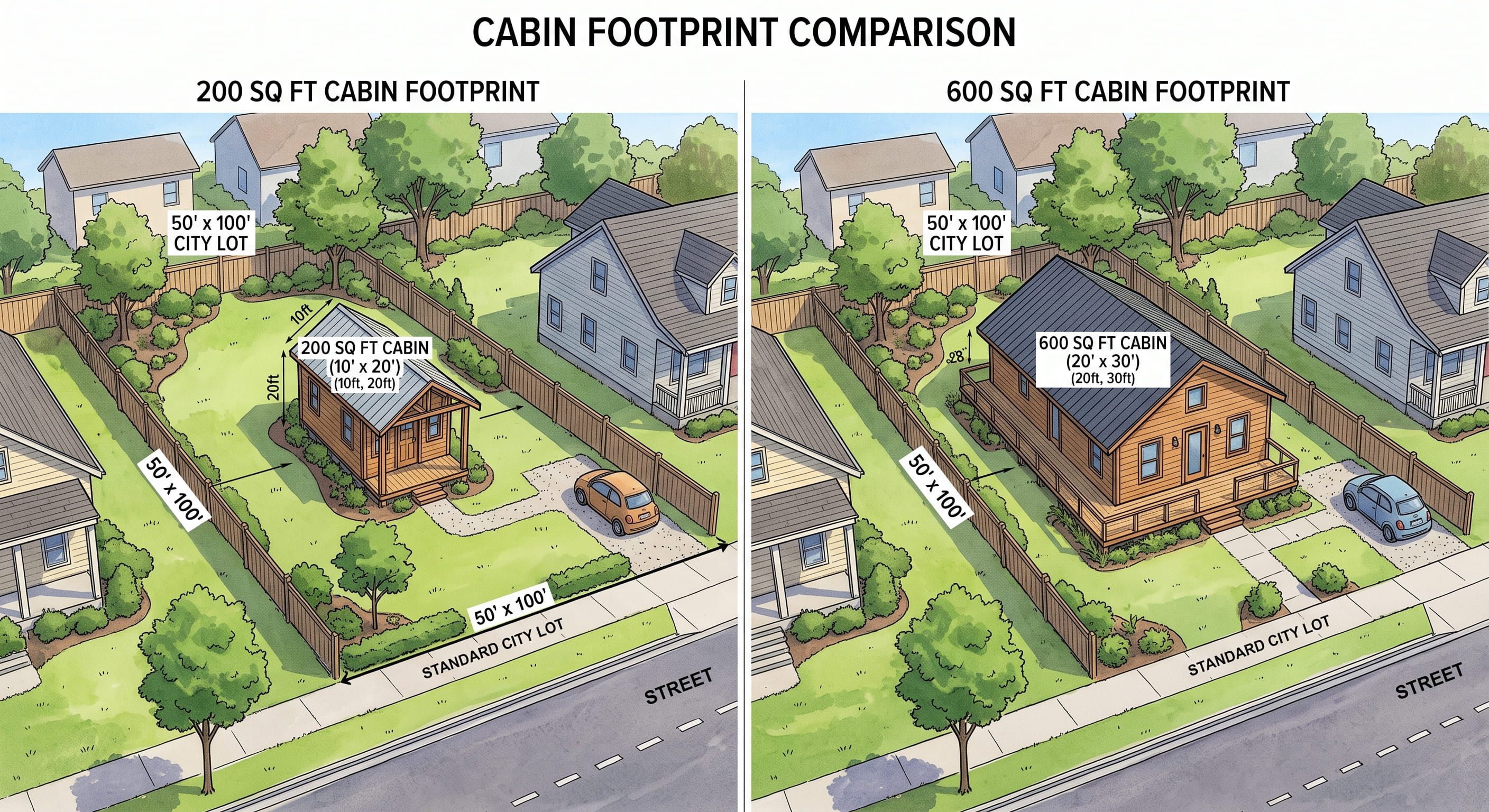
- The structure is very small. Many counties exempt structures under 200 square feet.
- It's temporary. Some counties don't require permits for structures without a permanent foundation.
- The county has minimal enforcement. Some very remote counties simply don't enforce building codes for small structures on rural land.
According to Felicia, co-founder of Compass Land USA, this is one of the most misunderstood parts of buying land. "People hear 'rural land' and assume anything goes. That's not always true. Even remote counties have rules. The key is calling the county before you buy, not after."
The only way to know for sure is to call your county's planning and zoning department directly. Ask specifically about permit requirements for a structure of your planned size and type. That one phone call tells you more than hours of searching online.
Before you build, it's worth knowing how to check property zoning before you buy. It's the same research process and will tell you what's allowed on the land.
What Building Codes Apply to Small Cabins?
Building codes for cabin construction vary more than most buyers expect.
Most states have adopted the International Residential Code (IRC) or the International Building Code (IBC). But state-level adoption doesn't mean uniform enforcement at the county level. Rural counties often adopt these codes with modifications, or simply don't enforce them strictly for small, remote structures.
Here's what you'll generally run into:
States with stricter code enforcement: Florida, Colorado (certain counties near towns), Nevada (especially Clark County)
States with lighter rural enforcement: Arizona (many rural counties), New Mexico (rural areas), parts of Colorado's high desert
The type of structure matters too. A permanent cabin on a poured concrete foundation faces more scrutiny than a cabin built on skids or adjustable piers. Off-grid features like composting toilets and rainwater collection have their own set of regulations on top of standard building codes.
Andrew, co-founder of Compass Land USA with over 800 completed land transactions since 2017, hears this question constantly. "We always tell buyers: your county's planning department is your best friend here. A 10-minute phone call tells you more than a week of internet research. They'll tell you exactly what applies to your specific parcel."
A building permit for a cabin typically costs $500 to $2,000 in rural areas. Some counties calculate the fee as a percentage of the project's estimated value. A contractor who pulls the permit on your behalf usually includes this fee in their quote.
Before you design your cabin layout, check what utilities are available on your land, power, water, and road access all affect your build plan.

How Much Does It Cost to Build a Small Cabin on Vacant Land?
This is the question nearly every buyer asks first.
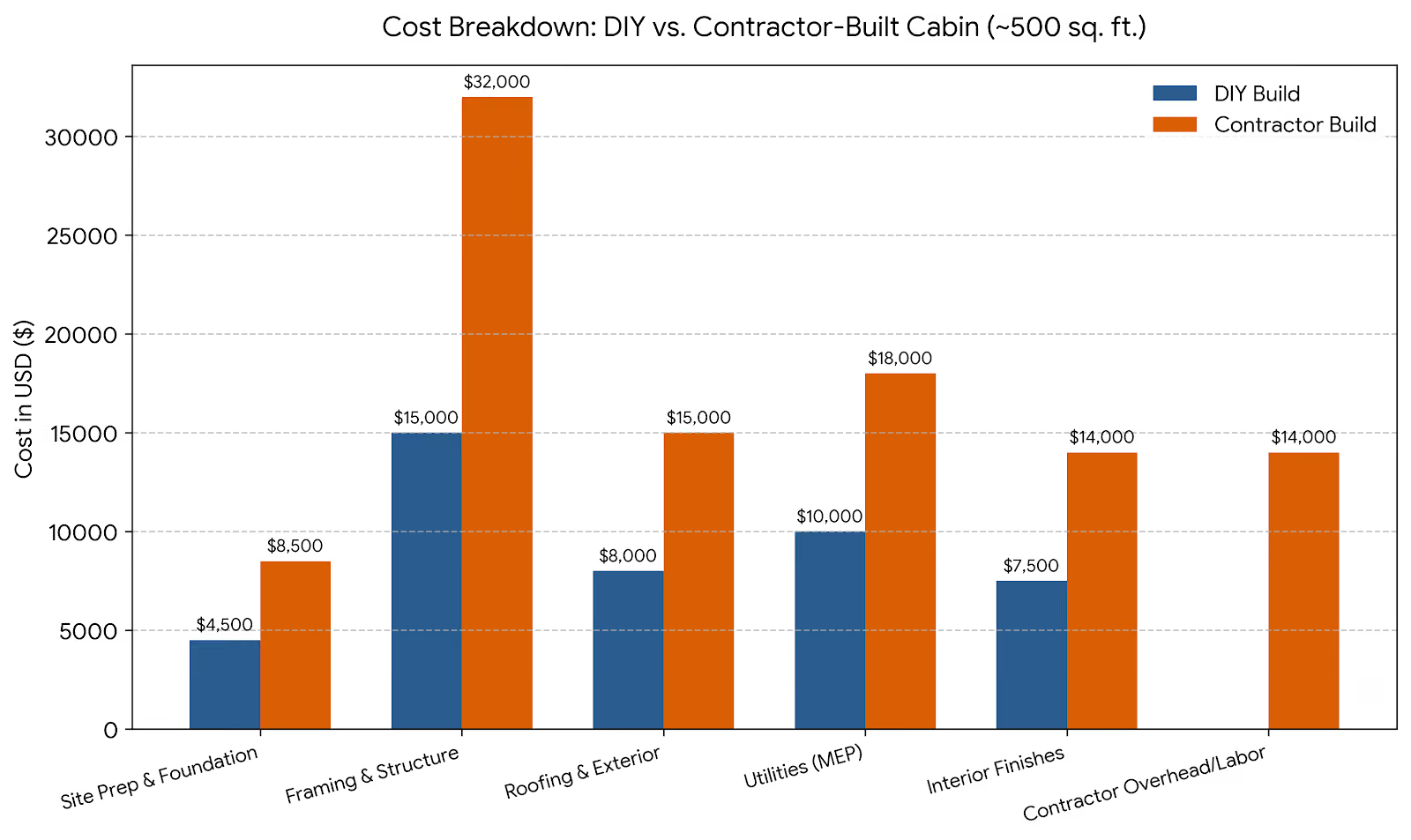
The cost to build a small cabin on vacant land ranges from $30,000 on the low end to over $150,000 depending on size, materials, location, and whether you hire contractors or do the work yourself.
Here's a realistic breakdown for a 400–600 square foot cabin:
| Cost Category | DIY / Budget Build | Contractor-Built |
|---|---|---|
| Foundation (slab or piers) | $3,000–$8,000 | $6,000–$15,000 |
| Framing and structure | $5,000–$12,000 | $15,000–$30,000 |
| Roofing | $2,000–$6,000 | $5,000–$12,000 |
| Doors and windows | $1,500–$4,000 | $3,000–$7,000 |
| Electrical (if grid-tied) | $2,000–$6,000 | $5,000–$12,000 |
| Plumbing and septic | $5,000–$15,000 | $10,000–$30,000 |
| Interior finish work | $3,000–$10,000 | $8,000–$20,000 |
| Total Estimate | $22,000–$61,000 | $52,000–$126,000 |
According to the National Association of Home Builders, the average cost per square foot for new residential construction was $153 in 2023. A basic cabin can come in at $50 to $150 per square foot depending on material quality and local labor costs.
The biggest cost variables are site access and utilities. A cabin on land with existing road access and nearby electric service costs significantly less to build than one that requires a new driveway, a drilled well, and a septic system.
Before you finalize your budget, check well drilling depth and costs in your area. This can add $8,000 to $25,000 to your total. And if you're still shopping for land, browse our available properties with road access to find parcels ready to build on.
How to Get a Cabin Permit Step by Step
Getting a building permit for a cabin doesn't have to be complicated. Here's what the process looks like in most rural counties.
Step 1: Contact the county planning and zoning department.Ask what permits are required for your planned structure. Tell them the square footage, foundation type, and whether the structure will be occupied full-time or used as a seasonal retreat.
Step 2: Review setback requirements.Every county sets minimum distances between structures and property lines, roads, and waterways. Your cabin must meet these setbacks or you'll face a stop-work order after you've already started.
Step 3: Submit your permit application.Most counties require a site plan showing where the cabin sits on the lot, a basic floor plan, and a description of materials. Small-structure permits often have simplified applications.
Step 4: Wait for approval.Rural counties typically process permits faster than urban ones. Most approvals come within two to six weeks. Some counties with limited staff take longer.
Step 5: Schedule inspections.Most permits require inspections at specific stages: foundation pour, framing, electrical rough-in, and final. The county inspector signs off at each stage.
Step 6: Get the final inspection signed off.Once the final inspection is complete, the structure is legally permitted and you can occupy it.
One more thing to do before you start: check for back taxes and liens on the land. Unresolved liens can complicate your permit process and your ability to sell later.
Minimum Size Rules: What Counties Actually Require
One of the most common questions we get: what's the smallest cabin I'm allowed to build?
The answer depends entirely on your county and what the structure will be used for.
If the cabin is meant for sleeping or living, most counties follow the International Residential Code and set minimum habitable space requirements. The IRC requires any habitable room to be at least 70 square feet, with a minimum ceiling height of 7 feet. Most counties set a practical minimum of 150 to 220 square feet for an occupied dwelling.
For non-habitable structures like storage buildings and utility sheds, minimum size requirements are usually much lower or don't exist at all.
Here's a quick-reference breakdown:
- Weekend retreat with sleeping areas: Most counties require at least 200–400 sq ft and one habitable room
- Storage shed or non-habitable outbuilding: Often under 200 sq ft with no permit required
- Full-time dwelling or tiny home: Stricter minimums often apply, typically 400+ sq ft, plus more stringent code requirements
Counties in agricultural or rural zones sometimes have the most flexibility. Counties near towns or with active growth plans tend to enforce code more closely.
Andrew is direct about what skipping a permit can cost you: "We've seen buyers build without a permit and run into trouble when they try to sell. The county doesn't always show up while you're building. But a title company will ask questions, and an unpermitted structure can slow or kill a sale."
Can You Build a Cabin on Your Own Land Yourself?
Owner-built cabins are allowed in most U.S. states. But the rules have some important limits.
Most states allow homeowners to act as their own general contractor on a property they intend to occupy. This is called an owner-builder exemption. Under this exemption, you can pull permits yourself, hire subcontractors for specialty work, and handle most of the physical construction with your own labor.
The main limits to know about:
- Owner-occupancy requirement. Most owner-builder exemptions require you to occupy the property after completion. Building and immediately selling can trigger the same contractor licensing rules as commercial construction.
- Licensed trades still required. Even with an owner-builder exemption, most states require licensed electricians and plumbers for those portions of the work.
- Some counties require proof of intent. A signed affidavit stating you plan to occupy the structure is common.
Owner-built cabins work especially well for weekend retreats and hunting camps where the owner plans to use the property personally. For a cabin you intend to rent or sell quickly, hiring a licensed general contractor is the safer path.
If you're thinking about other ways to use your land beyond a cabin, check out 44 unique things you can do with vacant land for ideas that don't require a permit. And if you're ready to find land in Arizona, browse our available Arizona properties.
Off-Grid Cabins: The Extra Planning Most Buyers Skip
Building an off-grid cabin on vacant land adds a layer of planning that surprises most first-time buyers.
Off-grid means thinking through every utility the cabin will need: water, waste disposal, and power.
Water: A drilled well is the most reliable option for a permanent off-grid water source. Drilling costs depend heavily on local geology and required depth. In Arizona and Nevada, many properties access aquifers within 200 to 500 feet. In other areas, depths of 800 feet or more are common. Alternative sources include water haul tanks and, where legal, rainwater collection.
Waste: Without sewer service, you'll need a septic system or an approved alternative. Conventional septic systems cost $5,000 to $25,000 depending on soil conditions and system design. Some counties allow composting toilets as an alternative to full septic, but this requires county-specific research before you plan your layout.
Power: Solar with battery storage is the most popular off-grid power solution for cabins. A basic system adequate for lighting, device charging, and a small refrigerator starts around $8,000 to $15,000 for equipment. Most buyers start with a smaller system and expand it over time as their budget allows.
"Off-grid doesn't mean roughing it," Felicia says. "We've seen buyers put together a really comfortable weekend retreat for under $50,000 total, land included. You just have to plan the utilities as part of your budget from day one, not as an afterthought."
Before you finalize your off-grid build plan, check property access and what road work you might need. Getting materials to a remote site is a major cost variable. And if Colorado is on your list, browse our available Colorado properties.
Frequently Asked Questions
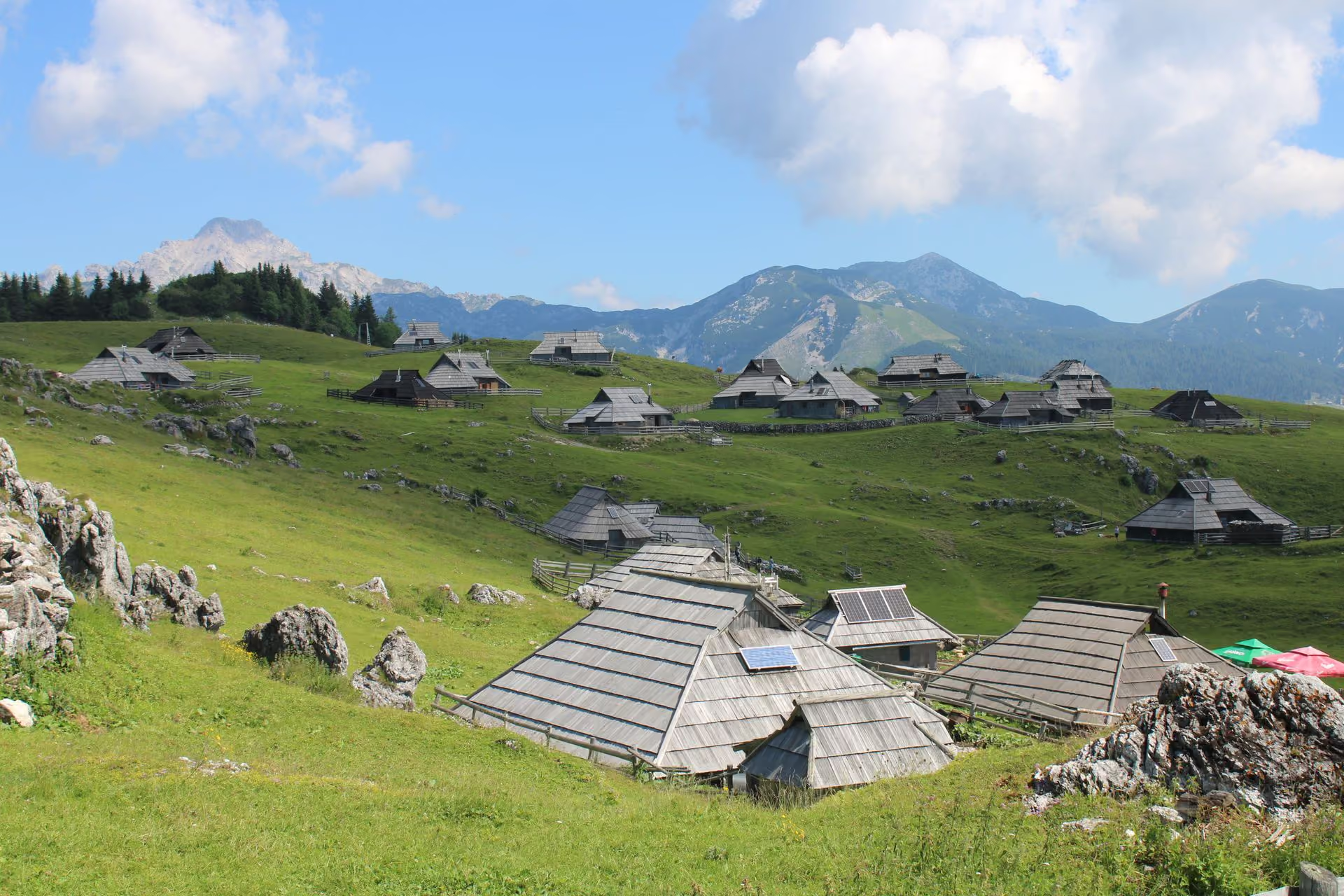
How much does it cost to build a small cabin on vacant land?
A small cabin between 400 and 600 square feet typically costs between $30,000 and $125,000 depending on location, materials, and whether you hire contractors or build it yourself. The biggest cost variables are site access and utilities. If you need to drill a well, install septic, and run a driveway, plan to add $20,000 to $50,000 on top of the structure itself.
Do I need a permit to build a cabin on my land?
Most counties require a building permit for any permanent structure, including cabins. Some rural counties exempt very small structures under 200 square feet or non-habitable outbuildings. The only reliable way to find out is to call your county's planning and zoning department before you build. Skipping a required permit can create problems when you sell.
What is the minimum size cabin I can build?
For a cabin used as sleeping or living space, most counties follow the International Residential Code and require a minimum of about 150 to 220 square feet of habitable space. Counties with light enforcement may not inspect small weekend retreats at all. Storage sheds and utility outbuildings often have no minimum size requirement in rural areas.
Can I build a cabin on my land myself?
Yes, in most states. Owner-builder exemptions allow you to act as your own general contractor on property you plan to occupy. You'll still need licensed subcontractors for electrical and plumbing in most states. Check your state's specific owner-builder laws before you start. Requirements vary enough that a quick call to your state contractor licensing board is worth making.
What building codes apply to a small cabin?
Most states have adopted the International Residential Code, which governs small dwellings. Rural counties often modify or lightly enforce these codes for remote structures. Your county planning department can tell you exactly which codes apply to your parcel and what inspections are required. Don't rely on what neighboring counties do; the rules are specific to where your land sits.
Can I put an off-grid cabin on any piece of vacant land?
Not without checking first. You still need to verify that zoning allows residential or recreational use on your specific parcel. Off-grid systems like composting toilets and rainwater harvesting are subject to their own county and state rules. Remote or agricultural land sometimes has fewer restrictions, but always confirm with the county planning department before you design around off-grid utilities.
How long does it take to get a cabin building permit?
In most rural counties, permit processing takes two to six weeks. Counties with limited staff or high permit volume may take longer. Submitting a complete application with a clear site plan and materials list speeds the process considerably. Incomplete applications get kicked back and restart the clock.
Do I need a property survey before building a cabin?
You don't always need a new survey, but you do need to know your exact property lines. Your setback compliance depends on them. If you don't have a recent survey, hiring a licensed surveyor typically costs $500 to $1,500 and is almost always worth it before you break ground on a permanent structure.
What to Do Next
Building a cabin on your own land is very doable. The process is straightforward once you understand what your county requires and get a realistic handle on your costs.
Start with a phone call to your county planning and zoning department. Find out what permits apply, what setbacks you need to meet, and what inspections you'll need to schedule. Then plan your utility strategy before you design the structure.
If you're still looking for land, search for properties that already have road access and sit in counties with favorable zoning for residential or recreational use. Those two factors will save you significant time and money on your build.
We've helped hundreds of buyers find the right land for a cabin, weekend retreat, or hunting camp. If you have questions about a specific property or want to see what's available with owner financing, call or text Andrew anytime at (313) 349-0434. You can also browse our current inventory at compasslandusa.com.
Ready to look at land? Explore our owner financing options and see how we make land ownership accessible without a bank.
Andrew
Co-founder, Compass Land USA
Andrew co-founded Compass Land USA after buying and selling land for years without needing a single bank. He's been on both sides of hundreds of owner-financed deals across five states.
You've Read Enough. Time to Own Something.
Ready to Stop Renting Your Life and Start Owning Something?
Browse available land in Arizona, Colorado, Florida, Nevada, and North Carolina. Owner financing on every parcel. No bank. No credit check. Close in days.