
Protect Yourself
Real Costs
Getting Electricity to Vacant Land: Grid Power vs. Solar (With Real Costs)
Running grid power to rural land can cost $10,000 to $70,000 or more. Solar costs less to start but limits what you can run. Here's how to figure out which option actually makes sense for your land.

Getting Electricity to Vacant Land: Grid Power vs. Solar (With Real Costs)
You found a piece of land you love. The location is right, the price works, and you're already thinking about what you'll build. Then someone asks: "Is there power on the property?"
That one question can change the math on a deal completely. Getting electricity to vacant land is one of the biggest costs buyers underestimate, and one of the least-understood parts of buying raw land. The answer isn't just "connect to the grid." It depends on how far you are from existing lines, what utility company serves the area, whether solar makes more sense for your situation, and how much power you actually need.
Getting electricity to vacant land means either extending the existing utility grid to your property or installing an off-grid solar and battery system. The cost of a grid extension ranges from $10,000 to $70,000 or more depending on the distance from existing power lines, while a basic off-grid solar system for a small cabin typically runs $15,000 to $40,000 according to the National Renewable Energy Laboratory. According to the National Rural Electric Cooperative Association, extending power lines in rural areas costs between $35,000 and $50,000 per mile on average. For many rural land buyers, solar is not a compromise. It's the smarter financial choice.
This guide breaks down both paths, gives you real numbers, and helps you figure out which option makes the most sense for your land.
The Two Ways to Get Electricity on Vacant Land
There are two main paths to getting power on a piece of raw land.
The first is connecting to the utility grid. This means the local electric co-op or utility company runs new power lines from their existing infrastructure to your property. You get standard grid power, the same as any house. When the connection is done, you pay a monthly electric bill like everyone else.
The second is off-grid solar. You install solar panels, a battery bank, and an inverter on your own property. The system generates and stores power without any connection to the utility company. You pay the upfront cost of the equipment and installation, and then your electricity is essentially free.
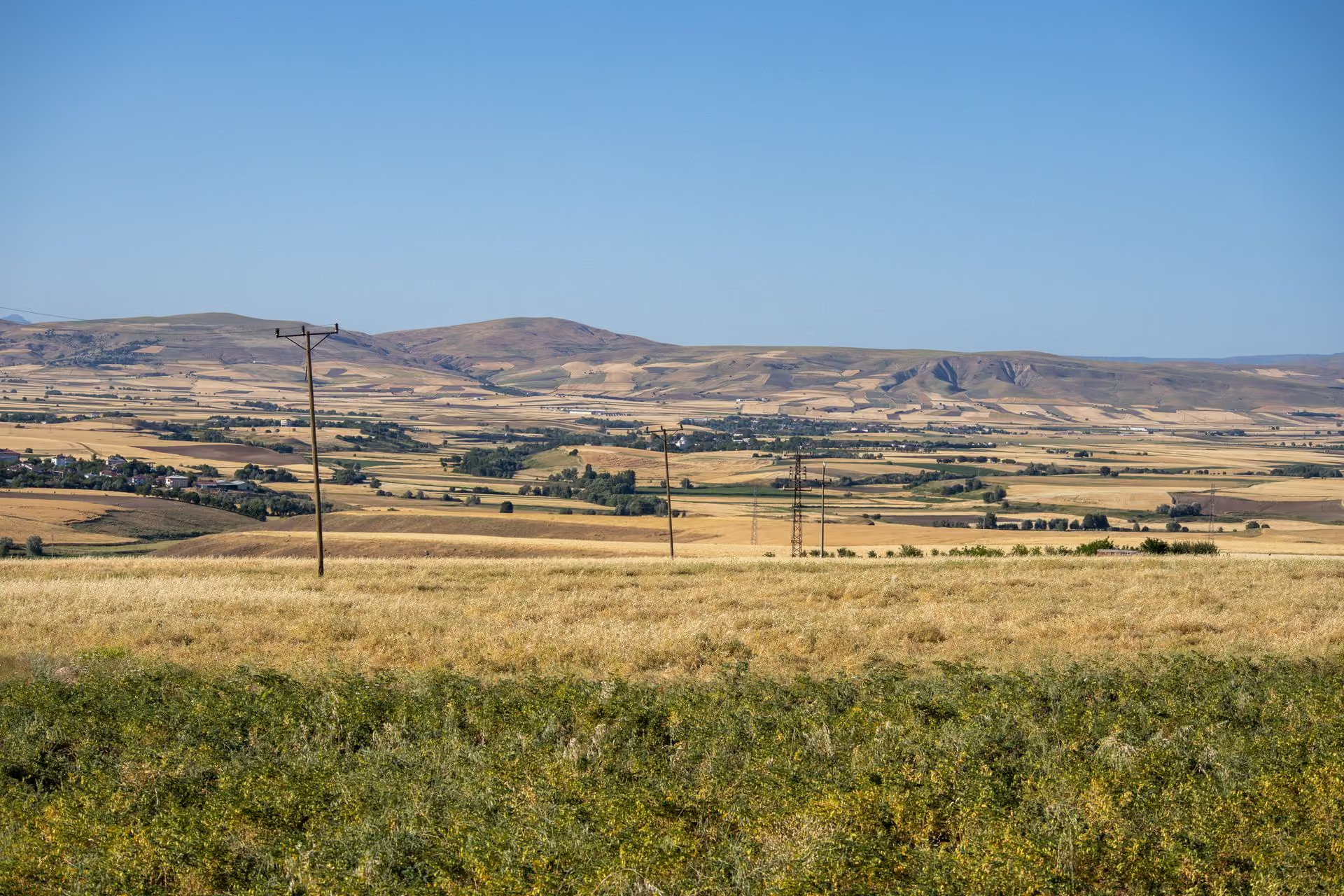
Both options can work well. Which one makes more sense depends almost entirely on one number: how far your land is from the nearest power lines.
"The first thing we look at when evaluating a property for a buyer is the distance to the nearest power lines," says Andrew, co-founder of Compass Land USA, who has facilitated over 800 land transactions since 2017. "That distance is the biggest cost driver. A property 500 feet from the grid and a property one mile from the grid are two completely different financial situations."
Before you start pricing anything, [LINK: check the utilities on your property first → /how-to-check-utilities-on-land/] to confirm what's actually there and how close the lines are.
.avif)
How Much Does It Cost to Run Power Lines to Vacant Land?
Grid extension is not cheap. Here's what drives the cost.
The main variables:
- Distance from the nearest power line to your property boundary
- Terrain (flat open land is cheaper than dense woods or rocky hillsides)
- Whether lines need to go overhead or underground
- Which utility company serves your area (co-ops and municipals have different rate structures)
- How much power you need (residential vs. just a pump or small shed)
The cost breakdown:
Electric utilities typically charge by the pole when extending service. Each pole costs roughly $3,000 to $5,000 installed, depending on terrain and materials. Poles are usually spaced 100 to 125 feet apart.
That means one mile of new line (about 5,280 feet) requires roughly 42 to 52 poles. At $4,000 per pole, that's $168,000 to $208,000 per mile in pole costs alone. Most utilities also charge a per-foot or per-mile line extension fee on top of that.
The National Rural Electric Cooperative Association reports that the average cost to extend rural electric service is $35,000 to $50,000 per mile. In difficult terrain or areas with labor shortages, that number can climb to $70,000 per mile or higher.
Here's a simplified cost table based on distance:
In addition to the line extension, you'll pay for a service entrance: the meter base, weatherhead, and panel on your side of the line. That typically runs $1,500 to $5,000 separately.
To find out what your specific utility company charges, call them with the parcel's legal description or county parcel number. Ask for a "line extension estimate." Most co-ops do this for free.
When the Grid Extension Cost Gets Too High
There's a point where the grid math stops working. For many rural land buyers in the states where we operate, Arizona, Colorado, Florida, Nevada, and New Mexico, that point comes sooner than you might expect.
In the high-desert areas of Arizona and New Mexico, properties are often miles from the nearest utility line. In the mountain counties of Colorado, terrain makes pole installation extremely expensive. In parts of rural Nevada, some grid connections can cost more than the land itself.
When the grid extension quote comes in at $40,000, $60,000, or more, the right question to ask isn't "can I afford this?" It's "does solar make more sense?"
Felicia, co-founder of Compass Land USA, always addresses this in our property disclosures: "We note the power line distance on every listing we publish because we don't want buyers surprised. A property can be a genuinely great deal even if it's miles from the grid, as long as the buyer knows that going in and prices their setup accordingly. Solar has changed the math completely over the last few years."
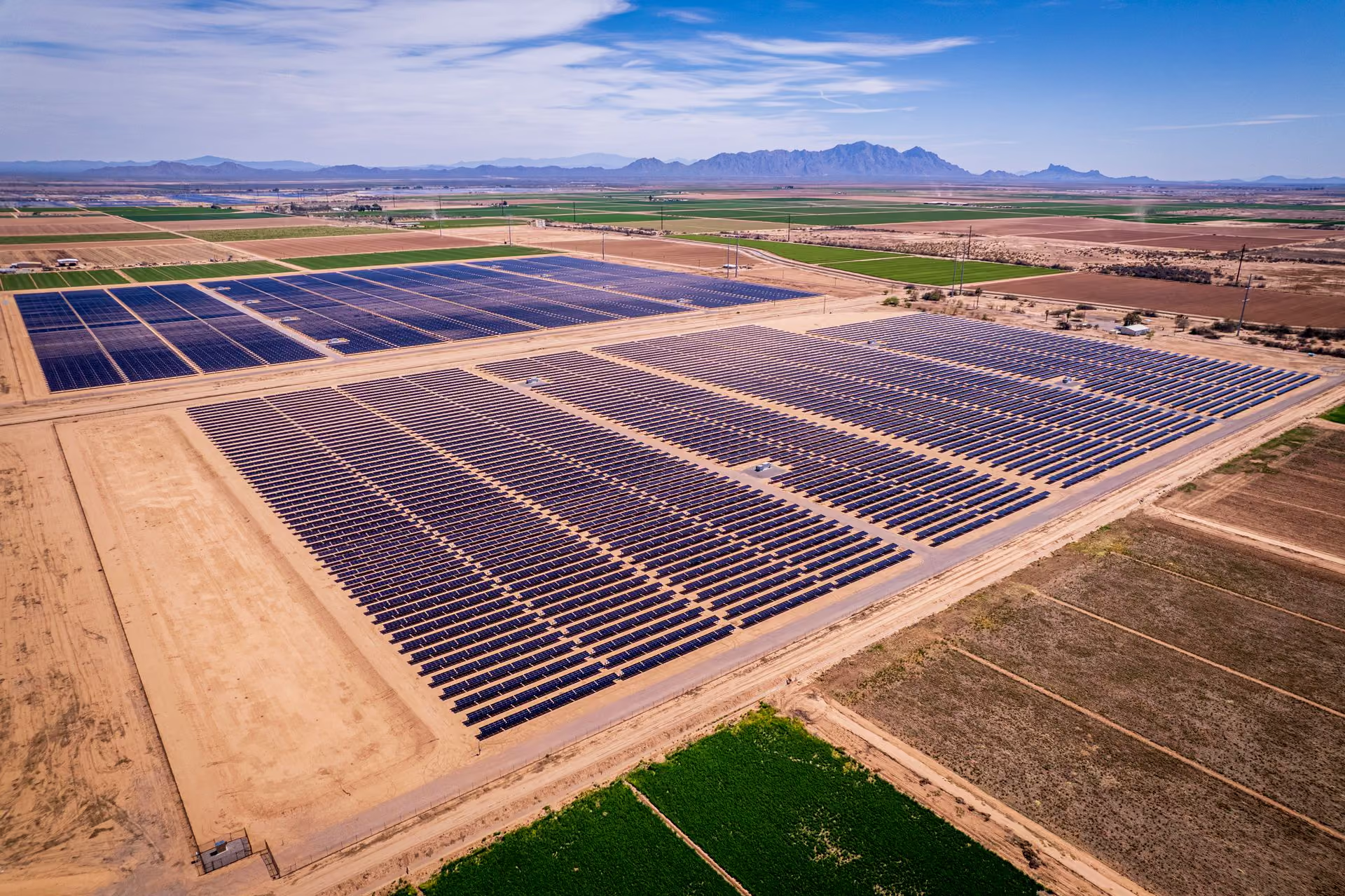
How Much Does an Off-Grid Solar System Cost on Vacant Land?
Solar costs have dropped dramatically. According to the Solar Energy Industries Association, the average cost of a solar installation has fallen more than 70 percent over the past decade. For vacant land buyers, this changes the calculation significantly.
Here's what a basic off-grid solar setup for a small cabin or weekend retreat includes:
- Solar panels: Capture sunlight and convert it to DC power
- Battery bank: Stores the energy so you have power at night or on cloudy days
- Inverter: Converts DC power from the panels/batteries to AC power that runs standard appliances
- Charge controller: Manages power flow between panels and batteries
- Mounting hardware and wiring
Typical cost ranges:
For most people buying raw land for camping, a weekend cabin, or a future homestead, a medium system in the $15,000 to $25,000 range handles everyday needs comfortably.
Keep in mind that solar systems are a one-time cost. You pay once and have free electricity for 25 to 30 years. The National Renewable Energy Laboratory estimates the average off-grid solar system pays for itself in 7 to 12 years compared to utility bills, even before factoring in grid extension costs.
"Solar in Arizona and New Mexico is as close to a no-brainer as we've seen," says Andrew. "We have properties in Mohave County and in parts of New Mexico where the sun shines 300-plus days per year. A properly sized solar system on those properties will outperform a grid connection on cost over any reasonable time horizon."
Grid vs. Solar: Which Makes More Sense for Your Land?
Here's the direct comparison:
The short answer: if your land is less than 300 to 500 feet from existing power lines, grid connection is often cheaper upfront. If you're more than half a mile from the grid, solar will almost always win on total cost over a 10-year horizon.
If you want to model your specific numbers before committing, use our [LINK: free Power-to-Land Cost Estimator → compasslandusa.com] to compare both options based on your land's actual distance and usage needs.
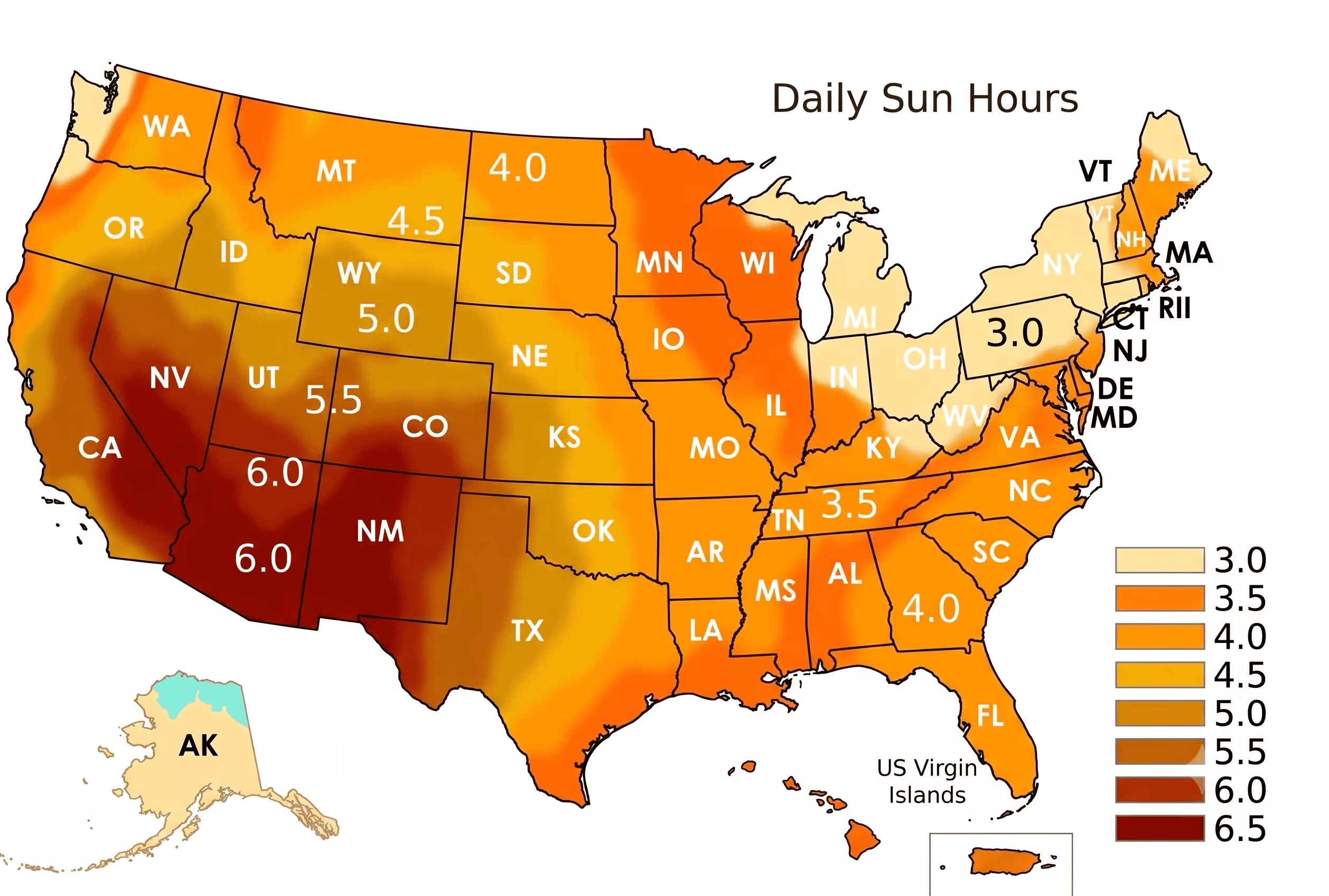
What Electricity Looks Like in Our Five States
Every state is different. Here's what to expect in the areas where we sell land:
Arizona: Excellent solar state. Average of 6 to 8 peak sun hours per day in most of our listing areas (Mohave County, La Paz County). Grid lines vary by county. In some remote areas, solar is the only realistic option. In others, a co-op line may be within a short drive of the property line. Always check with the local rural electric co-op. If you're looking at [LINK: buying land in Arizona → /buying-land-in-arizona/], utility setup is a key due diligence item.
Colorado: More complex. Mountain properties can have long winters with reduced solar output. Grid lines in some areas of Park County, Costilla County, and Fremont County can be miles away. A solar system in Colorado typically needs a larger battery bank to handle winter. If you're [LINK: buying land in Colorado → /buying-land-in-colorado/], ask specifically about net metering rules if grid connection is possible.
Florida: Grid access is much more common in Florida, especially in central and northern Florida where our listings are concentrated. The state has strong solar incentives and net metering laws that make solar attractive even when grid power is available. If you're [LINK: buying land in Florida → /buying-land-in-florida/], solar plus grid backup is an increasingly popular setup.
Nevada: High solar potential, especially in the southern and central parts of the state. Rural Nevada has some areas with extremely limited grid access. Many buyers in these markets plan for solar from day one.
New Mexico: Similar to Arizona. Remote parcels in Catron County, Sierra County, and Roosevelt County may be far from utility lines. Solar is common and cost-effective. Water pumps, well systems, and basic cabin setups run reliably on solar in this climate.
Hidden Costs Buyers Don't Account For
Whether you go grid or solar, there are costs that don't show up in the headline number.
Permits: Most counties require an electrical permit for either a grid service entrance or a solar installation. Permit fees typically run $100 to $500, but the real cost is time: in rural counties, permitting can take weeks.
Trenching: If the grid line or solar wiring needs to go underground (often required near roads or structures), trenching adds $3 to $10 per foot. For 500 feet, that's $1,500 to $5,000 extra.
Transfer switch or sub-panel: If you plan to have both solar and grid connection (a grid-tied hybrid system), you'll need a transfer switch or additional sub-panel. Add $500 to $2,000.
Well pump compatibility: If you plan to drill a well, make sure your solar system can handle the pump's startup surge. Submersible pumps often pull 2 to 4 times their running wattage when they first kick on. A system sized for a cabin may need to be upsized if a pump is part of the plan. Read our article on [LINK: checking property well depth → /check-property-well-depth/] for more on what's involved with water on raw land.
Generator backup: Many off-grid solar owners keep a generator for extended cloudy stretches or unusually high usage. A reliable propane generator runs $500 to $3,000.
How We Think About Power When Buying and Selling Land
At Compass Land USA, we do our own due diligence on every property before we list it. Part of that is checking the utility situation.
We note on every listing whether grid power is available, approximately how far the nearest power lines are, and whether the property is in an area well-suited for solar. We don't hide the details.
"We've had buyers tell us they specifically wanted land with no grid access because they wanted to go fully off-grid," Andrew says. "We've also had buyers who needed grid power for a business use. We try to match people to properties that actually fit their plans, not just sell them something that sounds good."
Before you close on any property, [LINK: check the utilities thoroughly → /how-to-check-utilities-on-land/] and get an actual quote from the local utility. Our article on [LINK: the full cost of utilities on vacant land → /cost-of-utilities-on-vacant-land/] covers well water, septic, and internet costs alongside electricity so you can budget the whole picture at once.
Also check [LINK: what you can legally do on the land → /how-to-check-zoning-of-a-property/] before you invest in a utility setup, since zoning determines what structures are allowed. And make sure [LINK: road access is confirmed → /how-to-check-property-access/] before you assume utility crews can reach the property.
Frequently Asked Questions
How much does it cost to run a power line to vacant land?
Running a power line to vacant land costs $5,000 to $15,000 for properties very close to existing lines (under 300 feet). For properties farther away, expect $35,000 to $50,000 per mile on average, according to the National Rural Electric Cooperative Association. Difficult terrain, steep grades, dense trees, rocky soil, can push costs higher. Always get a quote from the local rural electric cooperative before making assumptions.
Is solar cheaper than grid power for rural land?
For most rural land buyers more than half a mile from existing power lines, solar is less expensive when you factor in the full cost of a grid extension. An off-grid solar system for a small cabin runs $15,000 to $25,000, compared to $40,000 to $200,000 for a grid extension over similar distances. Solar also eliminates the ongoing monthly electric bill, which matters over a 20 to 30 year horizon.
How many solar panels do I need for a cabin on land?
A basic cabin with lights, phone charging, a small refrigerator, and a pump typically needs a 3 to 5 kilowatt solar system with battery storage. That usually means 8 to 16 standard 400-watt panels depending on your location's sun hours. In high-sun states like Arizona or New Mexico, systems can be sized smaller for the same output. A solar installer can size your system based on your actual load requirements.
What does a power pole extension cost per pole?
Each pole in a rural electric line extension typically costs $3,000 to $5,000 installed, including the pole, hardware, wire, and labor. Poles are usually spaced 100 to 125 feet apart, which means a one-mile extension requires roughly 42 to 52 poles. In very difficult terrain or remote locations, per-pole costs can run higher.
Can I get electricity to land that's a mile from the grid?
Yes, but it is expensive. At typical rural extension rates of $35,000 to $50,000 per mile, a one-mile connection can cost $40,000 to $70,000 before any service entrance or interior wiring costs. At that distance, most buyers seriously consider solar instead. Getting a grid extension quote from the local utility company is free and takes just a phone call. Always get that number before deciding.
Does off-grid solar work in cloudy climates?
Off-grid solar works in cloudy climates, but requires a larger system and battery bank to maintain reliable power during overcast stretches. Colorado is a good example: it averages fewer sun hours than Arizona, so a Colorado cabin needs more battery storage or a backup generator. A local solar installer who works in your specific county can size the system appropriately. The higher upfront cost is usually still worthwhile compared to a long grid extension.
Does having solar or grid power increase land value?
Yes. Properties with confirmed electrical access, whether grid or solar, are worth more than comparable land with no power. Grid-connected land typically sees a stronger value premium because it's more familiar to buyers and lenders. That said, a well-installed solar system adds measurable value, and in remote areas it can be the feature that turns a hard-to-sell parcel into a sought-after property.
The Bottom Line on Getting Power to Your Land
Getting electricity to vacant land is not a mystery, but it does require real research and real numbers. The distance from your property to the nearest power lines is the single biggest factor in your decision. Get that number first.
If you are close to the grid, connecting is likely your best option. If you are half a mile or more away, run the solar math before you commit to a grid extension. In most of the states where we operate, solar wins on total cost at that distance.
The research you do before you buy protects you from expensive surprises after you close. If you want to talk through the utility situation on a specific property, call or text Andrew anytime at (313) 349-0434. You can also [LINK: browse our available properties at compasslandusa.com → compasslandusa.com/properties], where we list the utility details for every parcel.
Andrew
Co-founder, Compass Land USA
Andrew co-founded Compass Land USA after buying and selling land for years without needing a single bank. He's been on both sides of hundreds of owner-financed deals across five states.
You've Read Enough. Time to Own Something.
Ready to Stop Renting Your Life and Start Owning Something?
Browse available land in Arizona, Colorado, Florida, Nevada, and North Carolina. Owner financing on every parcel. No bank. No credit check. Close in days.